Showing posts with label film. Show all posts

Monday, November 18, 2013

I'm watching all of the books.

This week, we're reviewing Catching Fire because the new movie is coming out (and it will be awesome and I'm going to see it Saturday.  So be jealous.)  I know that we usually talk about author bios on Mondays (or something equally educational) but today, we're not doing that.

In fact, this post has pretty close to zero literary value.  It's November.  Cut us some slack.

Instead, we're going to post all the trailers for the books-to-movies coming out.  And we're going to start with Catching Fire.


This isn't the only movie that was first a book coming out.  The Book Thief is already in theaters.  If you're going to go see it, I advise a box of tissues.


The last one we're going to tell you about is actually a book that we haven't talked about much, but we both love.  How I Live Now is only being released in select theaters.  Which is sad, because I really want to see it.


Those are all the movies that we know about coming out based on books.  Did we miss some?  Which are you most looking forward to seeing?

Saturday, August 10, 2013

By Its Cover - Richard II by William Shakespeare

Welcome to a special edition of By It's Cover.  BY IT'S ACTOR!!!

Really, let's face it, there are a million and one covers to Richard II.  Annnnndd, since it's 10 PM the night before this post is due to go up and neither I, nor Alex, has actually written up the BIC, it probably means we're not really looking forward to it this week (because there are a million covers... and they're all kind of boring.)  So this week, I'm just posting a bunch of pictures of actors who have played Richard II (mainly because there's no one around to stop me.)

Alex may join in if she likes with any actors I missed... or maybe actresses.


This is Ben Wishaw.  He played Richard II in a very recent BBC version of the play.


Derek Jacobi played Richard II in 1970.  Probably a little old for the part, but very distinguished, nonetheless.  He was also on an episode of Dr. Who in 2007.


Mark Rylance portrayed him in 2003.  Again, Richard was very young, but I'm getting the feeling Hollywood is missing that point... as they usually do with these kind of things.


Waaaaiiiit a second, that's a girl!  Indeed it is!  Fiona Shaw (AKA Aunt Petunia), played Richard in a 1997 version of the play.  I don't know if it was any good, but it's certainly an interesting take on the whole thing.

At the risk of sounding lazy, I'm only going to add that Cassy did a great job and I have nothing to add!


Wednesday, August 7, 2013

Favorite Shakespeare Play

Because we're reading one of William Shakespeare's plays this week, and because he wrote so darn many of them, we're picking our favorite Shakespeare play!


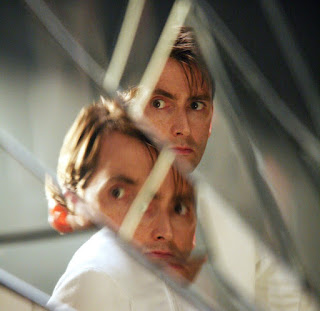
It will come as absolutely no surprise to anyone who knows me that I loved the Royal Shakespeare Company's version of Hamlet, given that David Tennant and Patrick Stewart are my two favorite actors, and they play Hamlet and Claudius / The Ghost, respectively.

I didn't really like Hamlet much until I saw this version. The characters are all just... terrible people. (Okay, I'll give Ophelia a pass, because I don't think her terribleness is really her fault. It's mostly Hamlet's fault.) Also, I had to read Rosencrantz & Guildenstern Are Dead in a theater class I disliked, and I didn't know Hamlet that well, so the two of them frustrate the hell out of me, even now that I know what's going on.

Side note: If you've never liked/understand the whole "alas, poor Yorick / I knew him" scene, you should watch Tennant do it. It's just great. And you can see from this still, although they kept the words verbatim the same from the original, the set and costuming are a contemporary update, and it works just... so well.


I had to read about a million and one Shakespeare plays in high school.  And then I became an English Major in college and read about 101 more.  So I've read a LOT of Shakespeare (Surprisingly, I have not read this week's pick, Richard II)


Over the years, I've always been more of a fan of his comedies, and in that realm, The Taming of the Shrew has always been one of my favorites.

I know that it's really terrible in terms of Women's Rights and all that (She was a fierce, independent woman and let herself be cowed by a man who married her for the money.)  But, I just really like Kate.  You don't get a lot of women, period, in Shakespeare, but to have a female that has such a HUGE effect on the story line and play?  Well, that's part of the reason I just really liked the play.

Plus, Kate completely SCHOOLS the women at the end of the play, which I thought was kind of cool.  The male kind of takes a backseat to Kate, which is a big deal when we're talking late 1500s Shakespeare.


10 Things I Hate About You is a modern adaptation to this play, and I pretty much LOVE that movie.  I mean, Heath Ledger singing?  What is not to love (plus, a really young Joseph Gordon Levitt.)

Tuesday, June 18, 2013

Zombies Through the Ages

There have been a million types of zombies portrayed in movies, books, even music.  They're all over the place.  These are just a few that have popped up over the years.


Why are they all in their underwear?  Do zombies not wear real clothes?

George A. Romero was probably the first one to throw zombies into pop culture.  Night of the Living Dead was our first glimpse at these flesh eating creatures.  They were portrayed as slow moving, brainless things.  Arms out, feet shuffling, they were portrayed as truly terrifying things, because there was no way to stop them, or reason with them or even a place to hide from them.

But even before Romero, we were seeing glimpses of corpses being reanimated.  Mary Shelley's Frankenstein definitely falls into the category of Zombie.  Sure, Frankenstein's monster is a little more articulate than your average zombie, but that doesn't change the fact that he's made of a bunch of dead parts and walking around, terrorizing people.  Shelley wasn't the only one resurrecting the dead; Tales from the Crypt came out in the 1950s (and was basically HOSTED by a zombie), H.G. Wells also wrote a zombie-esque story called Things to Come and even Richard Matheson got in on the action with I Am Legend (It's traditionally defined as a vampire novel but it's about the reanimation of dead people.)

Night of the Living Dead was quickly followed by Dawn of the Dead (which then spurred one of the first Zombie parodies, Shaun of the Dead), the second in a six movie series.  Romero used these movies as social commentary.

By the late '90s, the world was Zombie crazy.  Buffy the Vampire Slayer had an episode involving zombies, making them, essentially, like living people, just a little more gross.  28 Days Later (and then 28 Weeks Later), started a huge zombie movement in the 2000s.  They're based on the idea that Zombies are created by an viral infection, one that can spread quickly and easily (World War Z, our book this week, is also based on this idea.)

Over the years, the nature of Zombies even changed.  They went from slow moving, shuffling, mindless things, to agile, fast, vicious animals.  Zombieland shows us a Zombie that can pursue you at great speeds (Cardio! Cardio! Cardio!)


Now zombies are everywhere from our TV shows (The Walking Dead), to our books (World War Z) even our video games (Resident Evil) and our music videos (Thriller).  These days, you're much more likely to get a quick and vicious zombie (which is a more accurate portrayal of real life, voo-doo zombies) than you are a slow, shuffling one.

No matter what kind of zombies there are, just remember, dear readers, to always have a zombie plan.
 

Thursday, March 7, 2013

The Bechdel Test

On Tuesday, Cassy mentioned the Bechdel Test, but I'm going to dive a little deeper into it for you today.


The test originated in a comic strip by Alison Bechdel called Dykes to Watch Out For. In a 1985 strip titled "The Rule," an unnamed character defined the Bechdel Test as her criteria for choosing movies to watch. It's intended to test movies, but I think it applies equally well to any narrative form, including TV episodes and novels.

The test is very simple. In order to pass, a movie must meet the following criteria:
There must be two female characters.
They must talk to each other.
The conversation must be about something other than a man.
(Told you it was simple.) Many people have suggested that it should also require that the characters have names, but this isn't always applicable.

The Bechdel Test is not perfect and doesn't really mean much. A movie can still be horribly sexist and pass the test. It can still be of extremely poor quality and pass the test. It can be prejudiced or offensive in thousands of other ways, and still pass the test.

It's just a fun exercise. It's not done to judge any qualities of the movies, but just to start a dialogue about the role of women in popular media.


Harry Potter series: Usually fails. I just watched the last two again, and they both failed. There are a handful of female characters, but they never have conversations about anything, not even men. (One-liners like "I've always wanted to use that spell" and "Not my daughter, you bitch" don't count as conversations.)


Lord of the Rings series: Not actually surprising, but huge fail. There are three female characters, and they're never anywhere near each other. (This goes for The Hobbit too, except there's only one female character in part one...)


Star Wars trilogy: Faaaaaail. It takes a real fan to even name a female character other than Leia (hint: there are two; secret: I didn't even know that much). Fun fact: the prequels actually pass the test, because of Padme's handmaids.


Brave: Pass! Merida and her mom talk about things other than boys (even though they also talk a lot about boys). Merida also talks to the witch, and boys aren't even mentioned.


Hunger Games: Pass! Katniss talks to her mom, Prim, Effie, and Rue (and only with Rue does she discuss Peeta as a love interest).


Men In Black: Fail. But to be fair, it has the word "men" right there in the title. The sequels also fail.


Ha! Look at those cell phones.
Clueless: Pass! The girls talk about things like clothes, shopping, exercise, driving, sex, grades, teachers, and parents... and also boys. The same goes for Mean Girls... they talk about other girls, and fashion, and the talent show... plus boys. Which brings me to a good point...

Like I said, passing the Bechdel test promises nothing about a movie, other than what it actually tests. It can still show women as vapid or jealous or mean or moody or any of a hundred other negative stereotypes. The thing is, using the test usually brings these facts to the foreground, making you think more critically about the ways women are portrayed in film. Interesting, right?

Check some of your favorite movies... do they pass the Bechdel test? What about your favorite TV shows and books? (Remember: This doesn't mean anything bad; it's just for fun!)

Tuesday, February 12, 2013

Pride & Prejudice Film Adaptations

1940

This is the first version of Pride & Prejudice that was ever done, and to be honest, it shows its age.  They really rush the story line, throwing things together that don't make a lot of sense.  They seem to want to get all the exposition of the book out in just a few scenes.  
 
They also don't have a lot of the period stuff down, but I think that's just another sign of the times.  Movies were still realitively new, so they didn't so much pay attention to things like appropriate clothes for the time period. As a result, it ends up being more Scarlett O'Hara than Jane Austen.

And the acting was... ehhhh.  Everyone in the movie ended up being nice and wholesome, when in the book, people really weren't.  Mrs. De Bough doesn't like Elizabeth in the book, but in the movie, it's a big conspiracy that she's trying to help Darcy.

1980

If you have ever seen a version of Pride & Prejudice that wasn't the Kiera Knightly version, than it was probably this one (though, I've heard the Colin Firth redux is pretty popular, so maybe not.)  There are some really great things about the BBC version.  For instance, BBC puts just about everything from the book into the movie.  Also, I really feel that the girls were appropriately cast in this series, which didn't happen in its predecessor.  The clothing was amazing and I really liked looking at all the pretty houses and seeing scenes I may not have seen in other versions.

However, it's attribute can also be its downfall.  Everything is included in this version, and it's all in order, but sometimes, things just needed to be condensed.  There are things about the novel that, as a viewer, are irrelevant and we don't really need to sit through them.  Over all, a decent version that you should sit down and watch at some point.

1995


The Colin Firth version with the infamous wet shirt scene (which... I'm still not really sure why it's in there.  I'm prrreeeetttttyyy certain this wasn't in the book.)  Honestly, Firth makes a great Darcy, and Elizabeth is well-cast too.  While I think some of the other characters are not what I would have expecting, I don't think there are any bad choices.

The BBC also seems to learn this time around.  Yes, there is a LOT of material in this one.  However, they're not as strict to the book as last time.  They learned what should be cut out and where you can combine and add things.  While this is long (you're looking at about five hours of show), it's a lot better than the first one that BBC did.  Definitely worth watching when you have some time.


2003

This is the only version of the book that, as your dedicated blogger, I didn't watch.  It wasn't available on Netflix, so I didn't see it, but it's a modern day version of Pride & Prejudice.  Elizabeth is a writer in college and fights with a business man, Mr. Darcy.  From what I've gleaned, it's like Pride & Prejudice in the way that Clueless is like Emma.  Keeps the basic plot points, but updates it drastically for modern day.

2005

To date, this is probably the most well known and, in my opinion, best adaptation of the bunch.  It doesn't try and modernize it, but neither does it include every detail that there ever was in the book.  It skillfully condenses the things you need to know, but also keeps the things that you absolutely love about the book.  Your favorite scenes and most inspiring speeches are included in it.  Not to mention, all the acting is well done.

Probably my only complaint is that, sometimes, you can tell they're disregarding the time period for the romance.  They were huge on propriety in 1818 England and didn't let men and woman walk around together, alone.  There was certainly no cuddling or touching or romantic anything until you were married (and sometimes not even then.)  This movie, while good, does take a few liberties.

2008

This adaptation is a little different than all the rest, mainly because it's not a true adaptation.  Amanda Price ends up in the world of Austen, living out her favorite book Pride & Prejudice.  Elizabeth ends up in present day, though the movie follows Amanda.  Inevitably, Amanda messes up the entire story line and can't seem to get back to her world (despite her many pleas with Elizabeth whom, we assume, is on the other side of the door.)


While a fun movie, to be sure, especially as we see Amanda stumble through this unfamiliar world, it has some major flaws.  Because of her forwardness, just about every man falls in love with her in a second, except for of course, Darcy.  We also miss some of the most beloved characters, like Elizabeth's Aunt and Uncle.  We seem miss some of the best moments of the book (if you read the book, I think you'll understand what scenes I'm talking about.)  Amanda seems to fill the role of Elizabeth, unknowingly.  So does she end up with Mr. Darcy?  Well, you'll just have to watch it yourself.
Don't let my complaints sway you to think I didn't like it, though.  It fulfilled all my girlie romance desires and had a satisfying ending.  One that you expected, but didn't at the same time.  Other than the copious amounts of crying (there were tons) and the movie going on probably longer than necessary (about two and half hours), I really enjoyed it.


The things I liked best about watching all of these movies was seeing different takes on my favorite parts of the book.  For the most part, a lot of the scenes were similar, but the acting was different.  I loved watcing Darcy and Elizabeth fight and interact.  I loved seeing who they would get for Mr. Collins, because I think he is just the most ridiculous character.  I think that the 2005 version probably had my favorite Mr. Collins, but I was never dissatisfied with any of the other choices.

I also learned things that I never caught onto in the book.  For instance, it took me until watching these movies that Mary isn't GOOD at the piano and singing.  Part of the joke is that she's so terrible at singing, which I never really grasped in the written word.

Saturday, January 26, 2013

By Its Poster: Hansel & Gretel

There are hundreds of different covers for the various publications of the fairy tale "Hansel & Gretel," to the point where it would be unreasonable to try to analyze even a fraction of them. To that end, instead of "By Its Cover" this weekend, we will look at the film Hansel & Gretel: Witch Hunters by its poster.


(Note: This is not a before-and-after evaluation, because I haven't seen the movie.)
 
Can I just say that it's produced by Will Ferrell and leave it at that? Oh, I can't? Fine.  I wouldn't have said anything.  I already assume it's awesome because it's Will Farrell.
 
Surprisingly, the first thing I notice on this poster is the crossbow that is almost out of frame. I've been thinking a lot lately about archery in film, because it's huge. The obvious example to point to is Katniss in Hunger Games but you also have dozens of others, from the classic Legolas in Lord of the Rings, to the obscure Kevin (in We Need to Talk About Kevin which didn't emphasize nearly strongly enough the fact that he chose a bow instead of a gun in order to stand out as a unique individual in the competitive field of school shootery).
 
The weaponry combined with the red blood-spatter-style text of the title serve to show us that this isn't your kindergartener's fairy tale. In fact, the plot summary from Wikipedia tells me that this is like the modern-day sequel to the fairy tale: this is our same old bro-sis combo, grown up and killing witches.
 
The second thing I think when I see this poster is, "Wasn't that guy in 28 Weeks Later?" because I still haven't seen The Avengers and he's also Hawkeye.  I knew it was Hawkeye!*
 
The internet seems to be confused as to the official MPAA rating of this film. (Some places say PG13, some say R.) Well, there should be no confusion: the official movie site says it's rated R (for those same reasons) and the trailer on the site is labeled "for mature audiences only." The trailer.)
 
It's hard to tell a likely rating from the poster alone. It looks like, "Oh, haha, the little kids from the familiar fairy tale have grown up and hunt witches now" which could be PG, or PG-13 if they swear about it and show blood, or R if they have "strong fantasy/horror gore & violence, brief sexuality/nudity, and language." Which, apparently, they do.  Look at the knockers on that chick.  You really think there won't be nudity?  

Which actually brings me to a semi-legitimate point that, do you ever notice that our main characters, especially our POSTER characters, are all beautiful, perfect and slim?  Because, think about it, if Hansel and Gretel were fighting monsters, don't you think they'd have a few more, oh I don't know, scars?  And, quite possibly, less limbs.  It's a huge commentary on OUR society that these are the people we continually choose to put on posters.

(Kind of like Hansel and Gretel the fairy tale is more of a commentary on German culture.  It's almost like I'm making connections, or something.)

*We feel that this is an appropriate time to tell you everyone has a super power.  And Cassy's is the uncanny ability to tell you the previous movie(s) an actor has been in by a mere glance. Alex's has something to do with grammar.

Thursday, January 24, 2013

Was the Book Really "Better"?

You might think that, because I'm a bibliophile and a librarian, I'm the kind of person who always leaves the movie theater grumbling that "the book was better." I'm not, and there's a very good reason why: books are an entirely different medium from film. It's like comparing apples and oranges.


The apple is film, because it takes less effort to consume.

It's easy to see why certain changes and omissions are made. The Harry Potter and Lord of the Rings movies would be impossibly long if they filmed the story line-by-line from the book.

Anyone who tells me this could have been improved
by the inclusion of Tom Bombadil will be fed to the Balrog.

But then you have instances like I Am Legend. I'm not talking about the 1964 film (The Last Man on Earth) or the 1971 film (The Omega Man). I'm talking about the 2007 version with Will Smith.

A man wearing leather clothes and holding a rifle walks alongside a dog on an empty street. A destroyed bridge is seen in the background. Atop the image is "Will Smith" and the tagline "The last man on Earth is not alone". Below is the film's title and credits.
That's the one.

I haven't seen the aforementioned older film adaptations, but I feel like they had to be closer to the book than this one, because I'm pretty sure The Avengers had more in common with Richard Matheson's novel than this film did.

Tony Stark would wither and die without ladies to woo, though.
Let's look at what the novel and film had in common (now would be a good time to stop reading this post if you want to avoid spoilers):
- The main character is named Robert Neville.
- There are zombie-like creatures caused by a disease outbreak. They can be killed by stakes to the heart, or sunlight exposure.
- Neville's wife and daughter die(d).
- Neville has a canine companion at some point, for some reason.
- Neville runs across a living female at some point, for some reason.
- Neville makes an attempt to understand/cure the disease.
That's it. Those are the only things I found in common between the book and the movie. That sounds like enough, right? Well, let's look at some of the differences:

The setting. Book: LA. Film: NYC.
No big deal, really. This is one of those understandable changes. We like to see post-apocalyptic movies set in New York. I suspect it's because NYC is so full of national icons, and part of the fun of post-apocalyptic movies is seeing familiar landmarks in ruin.

That was the driving force behind the majority
of Cloverfield's ticket sales

The bad guy. Book: Ben Cortman is a former friend of Neville's, turned zombie-creature, and he tries to evoke a response from Neville on a nightly basis, torturing him psychologically (in an attempt to get a chance at torturing him physically). Film: No Ben Cortman; just anonymous hordes of zombie-creatures.
I feel like Cortman's presence is one of those things that sets this zombie story apart from a lot of other zombie stories. Sure, some of them touch on the idea of seeing former acquaintances or loved ones zombified (28 Days Later comes to mind, with the girl's father succumbing to Rage right before their eyes) but this one interacts directly with our protagonist on a regular basis and contributes significantly to the story.

This is not Ben Cortman. This is the nameless 'leader' of the bad guys.

The dog. Book: The dog is a stray who wanders, hungry, near Neville's yard. Neville coaxes it closer with food and water, fears for its life (was bringing it closer a good idea, with Cortman leading zombies to his door every night?), and mourns its disappearance when it leaves him. Film: It's the family dog and has a horribly sad death scene that makes more people cry than every Oscar winner combined.
Okay... I get this, too. While the book's dog is subtly touching and tear-inducing, the film's version is better at evoking a stronger emotional response from a wider audience. This is how you adapt a story element to your medium.

Changing the dog's story was worth it just to have this still.

The ending.
I won't go into detail about the endings, because if you haven't seen/read one or the other or either, you should do so on your own without my interference. But suffice it to say that the film's ending is a pathetic cop-out that takes no risks and is not interesting in the bloody least, whereas the book's ending was a well-written surprise with a real message to deliver.

No, wrong, stop it, no no no, wrong, no. Just... no.
I know it probably sounds like I'm hating on the film version, and I'm really not. Remember? I said I enjoyed it. It's like an alternate universe version of the novel. (Which is how I think of it to keep myself from being too confused.)

But realistically, books and movies are different methods of story-telling, and should be viewed as such. That's why screenplays are not just a reformatted copy of the book. They have their own authors (who, yes, can sometimes be the same author who wrote the original text).
 
So, what if you like the movie better? Well, I can't really say I blame you. Movies have a lot of advantages, particularly for a mass audience.

Music. If you don't already realize the impact music has on a movie, start paying attention. There's music in scenes you probably never noticed the music in. Obviously, musicals rely heavily on music, but so do all other movies.

That's why John Williams is the man.
Even the absence of music is important. It can make a creepy scene creepier, an important scene more important, a lonely character lonelier, and a loud noise louder.

Imagery. This doesn't apply to readers with vivid imaginations, but there are a lot of people who just don't mentally translate words to images well. They read something like the pages-long description of Mordor in Lord of the Rings and see separate pieces: strongholds, towers, Mount Doom, a bunch of orcs running about. But in less than a second, Peter Jackson can just go, "This," and show you what it looks like, and you get it.

Pictures: I've heard they're worth a thousand words.
In Tolkien's case, it's more like 5,000 words.
He's wordy, is what I'm saying.
If you aren't the kind of person who imagines what something looks like in great detail while reading (like me, usually) then movies can fill in that visual gap for you.
 
Time. It's a sad truth, but if you ask someone why they don't read more books (or any books, I guess), they'll usually tell you it's because they're too busy and don't have the time.
 
Movies are typically limited to a couple hours or less. Books can take days to finish, depending on the book and your reading speed. If we're talking about movies that have been released to DVD or Netflix or whatever you use to watch movies at home, you can also usually multitask while you watch it; not often true of books. So if you want to hear a certain story, the movie is usually your less time-consuming option.
There's an exception to every rule.
 
So I guess my point is, whenever you find a movie - like I Am Legend - that is completely different from its book, or one - like Harry Potter - that tries to get as much of the source material included as possible but has to make some changes for practical purposes, keep in mind that books are not movies and movies are not books. It's fun to see a director/producer/actor's take on existing material, and if you don't like it, the book is still there for you to enjoy. (Or they'll remake it in a couple years anyway.)

Wednesday, January 23, 2013

Favorite Books into Movies

This week, since Hansel & Gretel is getting turned into a movie, and we're talking about the fairy tale, we thought adaptations would be appropriate to bring into the mix.  So today, it's favorite book/movie combination.


A Walk To Remember was one movie that I saw in which I hadn't read the book first.  I saw the movie and, if you've ever seen it, you'll understand why I bawled like a small child when I watched it.  It's about a girl, Jamie, diagnosed with Leukemia, and she falls in love with a boy, Landon... who then essentially helps her complete her bucket list. 


Why the cry, you may ask?  Well, he helps her do things like "be in two places at once" (they straddle the state line.)  She wants to get a tattoo, so he gives her a temporary one.  She wants to see this star, so he builds her a telescope to do so.  And, just when you think it can't get anymore heartwarming, when her father tries to tell Landon to shove off, Landon tells her father that he's not going anywhere, that he plans to stay with her until the end.


It's sweet and heartwarming and sad and just when you think you can't cry anymore, Jamie's father tells Landon that "[he was] her miracle."  Seriously, if you don't cry during this movie, you have no heart.


The book was also very good.  It kept pretty closely to what the movie had been.  It's nice because the book fills in a few gaps that the movie didn't put in (mainly for time.)  However, at the end of the day, I preferred the movie.  It went into more detail about her bucket list than the book did and I liked the things they chose for the movie than the book.  But they're both good, both amazing to read/watch and, probably, my favorite movie/book duo.


It was really hard for me to pick between two choices this week. I really love V for Vendetta. But I only recently read the book, and having done so, there are a lot of things different between the book and the movie that I'm not sure I love, so I have to go with my go-to feel-good movie: Little Women.


I watch this movie around Christmas every year, because it feels Christmassy (despite taking place over at least a decade). I also watch it several more times throughout the year. It's a comfort thing.

I first saw the movie when I was in elementary school, but I didn't read the book (by Louisa May Alcott) until I got a Kindle a few years ago. (It was free to download, so I really didn't have any excuse not to read it.)

The book and the movie feel the same. Not every scene from the book is reflected in the movie and not everything in the movie is directly from the book, but it gives me the same feeling, and I love that.

The book uses a sort-of framing device of a book called The Pilgrim's Progress (which I want to read but haven't gotten around to). The girls each receive a copy from their mother, and it drives them to better themselves of their own volition (instead of being told to).

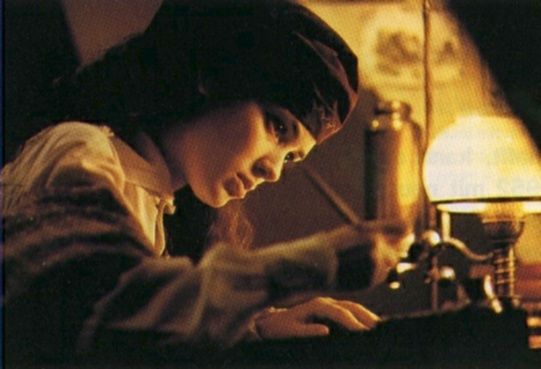
Winona Ryder plays my favorite character in this film (Jo, who I think I may have been in another life), plus she's Susanna Kaysen in Girl, Interrupted, another of my favorite book-to-movie adaptations.

Her acting is the only reason I feel like I should be
eating an orange when I'm writing. Seriously, I do.
On top of that, you have Susan Sarandon as Mrs. March, and if she isn't just the best mother-role actress ever... Plus you have a young Kirsten Dunst as Amy, Claire Danes as Beth, and Christian Bale (pre-Batman, pre-on-set-freakout) as Laurie. They all work really well together and were perfectly cast.

Like Cassy said above, the book is nice because it fills in some gaps and adds extra information, but the movie is cohesive enough to give you a complete story.

-----

Tell us in the comments (or Tweet it to us @reviewmetwice): What's your favorite book-to-movie adaptation?

Thursday, December 20, 2012

Film Adaptations of A Christmas Carol

Christmas movies. Am I right? I won't name them by name, but a lot of the new Christmas movies that - to their credit - attempt to tell an original story fall flat on their figurative faces. But there's always the old default: remake a familiar story. And A Christmas Carol has been retold dozens of times in film (and at least a hundred in television specials, to say nothing of the stage and radio adaptations). Here are some of the highlights of its history as a big-screen story.

Scrooge; or, Marley's Ghost (1901)
This is the earliest surviving screen adaptation of A Christmas Carol. It was a silent film, and very short, summing up an 80-page novel in the space of five minutes. It employed a number of the cinematographic tricks of its time, such as superimposing one film reel over another to give the impression of Marley's face appearing in the door. A popular practice at the time was to make film versions of old, familiar stories, which eliminated the need for too many intertitles (which are those frames with text in them to describe what's happening in silent films). Only a little under three and a half minutes of the entire film remains. You can watch it here on YouTube.

Still from Scrooge, or, Marley's Ghost (1901)
Scrooge (1935)
This was the first film version of A Christmas Carol that had sound. It starred Seymour Hicks as Scrooge. He had played the same role in a silent black-and-white by the same title in 1913, which had also been released in America in 1926 as Old Scrooge. This film was never copyrighted, and therefore exists in the public domain. It wasn't popular in recent times because of the poor quality of what remained, but it has been remastered.

A Christmas Carol (1938)
MGM made this version of the story, and cut out many of the more gruesome aspects in order to market a "family friendly" adaptation. (Example: Upon Marley's ghost's arrival, there are supposed to be phantoms wailing outside the window and creating quite a ruckus, but they are absent fromt this version - and many others.) This was the most famous version of the film until the 1951 version arrived on the scene. A colorized version was made available on VHS for its 50th anniversary, and is now on DVD (released in 2005) in a box set.

Theater poster for the 1938 version
Scrooge (1951)
This version was a flop in America (it was turned down for a screening at Radio City Music Hall for being "too grim") but it was one of the best films of the year in Britain. In the 1970s, it began to get play on PBS-before-they-were-PBS stations around the holidays, and is now considered a classic.


Theater poster for the 1951 version
Scrooge (1970)
A musical version (starring Alec Guiness, who you may know better as Obi-Wan Kenobi) that was the only film adaptation - so far! - of this story to be nominated for any Oscars (it got four nods), this film features eleven songs. Due to complications, Columbia Records has never released the soundtrack on CD, but an album was released in 1970.


Theater poster for the 1970 musical version
A Christmas Carol (1971)
I've actually seen this one (which is more than I can say for everything since the first one). You may recognize it, too: it was made for television and broadcast on ABC. It won an Academy Award for Best Animated Short Film. Chuck Jones (who you know and love if you're a fan of Looney Tunes and Merry Melodies, or the television animated version of How the Grinch Stole Christmas) was an executive producer. It was such a huge hit, after it was broadcast as a TV special, it was released in theaters as well.


Still from the animated 1971 version
Mickey's Christmas Carol (1983)
Another one I've seen. This was the first original Mickey Mouse theatrical release in over three decades. It was nominated for the Academy Award for Best Animated Short Film, but lost to Sundae in New York. Scrooge McDuck was an existing Disney character (since "Christmas on Bear Mountain" in 1947) when this film was made (though he was, of course, named after the part he played in this adaptation).

The Muppet Christmas Carol (1992)
By our old buddy Jim Henson's company, the Muppet version of A Christmas Carol starred Michael Caine as Scrooge. This was the first Muppet project after Henson's death, and was directed by his son, Brian. It didn't do as well in theaters as Disney had hoped, considering it was up against Home Alone 2 and Disney's own Aladdin.


A Christmas Carol (1997)
If you're familiar with this version, then you probably know it as "the animated one that stars Tim Curry as Scrooge and Whoopi Goldberg as the Ghost of Christmas Present." It, too, was a musical, with eight new songs.


From the DVD cover of the 1997 version
Christmas Carol: The Movie (2001)
This version is part animation, part live-action, and stars Nicolas Cage as Jacob Marley and Kate Winslet as Belle. (If you're thinking, "Who's Belle?" she's the fiancee that leaves Scrooge in the original story.) It was not well received.

A Christmas Carol (2006)
Anthropomorphic CGI animals take over all the roles in this adaptation that was extra-cleaned-up for young audiences. (Examples: Tiny Tim doesn't die in the future possibility Scrooge sees; he just becomes as miserly as Scrooge is.)


The 2006 animated animals version
A Christmas Carol (2009)
And here it is... the most recent film adaptation of the 1843 tale, this one starring Jim Carrey (or, his voice, anyway) and featuring motion-capture CGI animation.


So, there you have it, friends. More than 150 years after the story was originally written, and we're still retelling it (more or less faithfully to the original text) through a medium that didn't even exist when it was conceived of. Grab your favorite version, some hot chocolate, and enjoy.