Showing posts with label dystopia. Show all posts

Friday, January 2, 2015

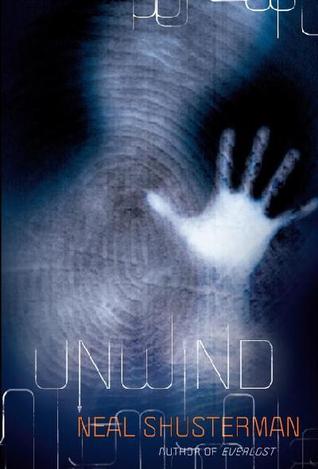
Review Me Twice - Unwholly by Neal Shusterman


If we were going to kick of a new year, I'm glad we decided to kick it off with this book.  I don't know if any of you have remembered, but Alex and I both LOVED Unwind.  I named it my favorite book of that year, and while she didn't, it was a close second for her.  We both have mentioned it more than a few times, I fangirled over Neal Shusterman when I met him, and I recommend that book to almost everyone I possibly can.

It's good to know that Unwholly lived up to its predecessor.  We got to see all of our favorite characters again: Lev, Conner and Risa all returned, but they weren't the only ones.  We got to see knew friends and old.  There were new enemies and new risks and new things coming at them from all angles that they had to deal with.

My favorite new character was Cam, a boy who was made completely out of parts from unwound kids.  You're not really sure if you want to love him or hate him because, just like the kids who are unwound, his rewound status is completely not of his own doing.  So really, should you hate the guy because other people decided to take parts of kids and put them together into him?

I really liked the ending of this book, because you knew, just KNEW that things were starting to come to a head.  Book three is going to be filled with a LOT and a LOT is going to happen (alternatively, I just happen to know that book three and four were supposed to be one book and had to be split into two, so what does that tell you?)

If you haven't read Unwind, well really, why do you bother to read this blog, because we've been telling you to read that forever now, but really, Unwholly was just as good and should be picked up.

Loved it. Can I just leave it at that? Because I loved it. And then I read UnSouled because I couldn't stop. I'm currently awaiting Undivided from the library.

I adore the concept of Cam, the first Rewound person in the world. By the end of this book, I wasn't entirely sure whether I liked him or not (I made up my mind during UnSouled). I love what Lev gets up to in this book. I really like Miracolina, because other than her, you don't get much of the true tithe perspective (she really insists that she still wants to be tithed, for even longer than Lev did in the first one).

If you like Unwind, you will absolutely, without a doubt, like Unwholly (and UnSouled).

Wednesday, August 13, 2014

Favorite African American Literature


My favorite is not the book we are reviewing this week (Kindred) but it is by the same author (don't judge.  If you've read anything by Octavia Butler, your favorite would be by her too).  It's also not TECHNICALLY one book.  It's three books, but when I first read them, I read them in one giant omnibus, so I feel like it's legit one book.

Either way, Lilith's Brood a fantastic series that has all the things that I love in it.  Awesome strong lead female character?  Check.  Dystopian universe?  Check.  Interesting take on the Genesis story?  Check.  Aliens?  Check.  Really, what's not to love?

Butler has a great way of making the impossible seem real, seem plausible and this story is no different.  I LOVE Lilith, and I love what she does and the story is completely engaging from start to finish.  Plus, you get a strong female, African-American lead character, which is way rarer than it should be.

Cover

I really like Walter Dean Myers. He's one of those YA writers who really understands how to write for a YA audience... like they're humans, of course. And from what I hear, lots of other librarians and teachers and parents like him, too.

I've only read one book of his: Monster. I read it for a teen lit class. It's from the perspective of a teenage African American boy accused of murder, taking place from his cell and inside the courtroom.

If I remember correctly (and I might not) this book is one of the ones that shows up briefly in one scene of Freedom Writers where the teacher buys books out of her own pocket so her students have something they can actually relate to and care about reading. And that's what I think of it... there aren't a lot of books that schools and parents approve of that speak directly to an at-risk teen audience. (That's not to say that this book doesn't show up on annual banned books lists, but rather that it is usually seen as less offensive than some of the alternatives.)

More YA books need to be direct with their very real audiences, and this one sets an excellent example.

Friday, August 8, 2014

Review Me Twice: Anthem by Ayn Rand


You might have been able to tell by my choice of topic yesterday that I thought this book was a little didactic. You'd be right, but since it's such a short book, it wasn't a huge problem. (No matter how over-the-top didactic you are, if the story is under 100 pages, it can't get too bad. Now that I've invited that upon myself, feel free to send me examples that disprove this assertion.)

I quite liked this book. I never thought I'd like Ayn Rand, but I had only really known about The Fountainhead and Atlas Shrugged, which are both bricks and get teased a lot elsewhere in pop culture.

My friend Missi suggested that I read this book, and called it a great introduction to Ayn Rand's work, and I agree with that.

I like the way the story is told, from the protagonist's first-person perspective, with all the ideas of his society ingrained into him. For example: in this society, the pronouns "I" and "me" have disappeared. Everything is about "we" and "us" because each person's entire life has to be about serving their fellow man. So even though our protagonist is breaking away from this society and learning how to be an individual, he's still using the language of it because it's what he knows.

I like the idea of this book: The world has thrown itself back into the dark ages.  Everything is for the good of humanity and the candle is the pinnacle of technology.  But you know what?  I wasn't a fan.  Like, at all.

First of all, I couldn't handle the third person that the main character spoke in.  I get the point: "I" and "me" and such similar pronouns had been eliminated from the language.  There was no individuality because everything had to be for the good of the whole, or it was evil.  If you weren't doing it for your fellow man, to further society, then you were sinning.

But honestly, it drove me crazy to continue to read it and, by the time he had switched over to the "I" and "me" pronouns, I was kind of over the whole thing.

Alex did make a fair point that, while incredibly didactic, it was incredibly short, so it didn't get on your nerves as much as it could have.  But at the same time, if I had to go read something like Atlas Shrugged, I feel like her didacticism would make me want to shoot myself.  So, I probably am never going to pick up her large works.

However, that being said, she does have a certain type of flair to her work, and her writing isn't BAD, per se, just not something I particularly enjoy.

Wednesday, August 6, 2014

Least Favorite Dystopian Novel

We love dystopian novels around here.  LOVE, love, love them.  But, let's face it, not every one can be good, and that applies to dystopian novels as much as any other book.  So this week, we're giving you a least favorite.


Ok, I don't want to give too much away with this because, well, let's face it, it's the third (and sort of final) book in the Divergent series.  There's a lot to give away.

But I hated it.  And not for the reason a lot of other people hated it (which I won't reveal), but there was a particular thing everyone hated, which I actually thought improved the book tenfold.

(Ok, fair warning, this part will be a little spoilery).  

But for the first, oh, I don't know, two thirds of the book... NOTHING HAPPENED.  I mean, absolutely nothing.  They sat and putzed around a complex and talked about what happened in the past and it was about 300 pages of exposition, with this fake rebellion in the middle of the book as if to say, "yes, I know I'm getting boring, so here's the plot of the last two books in 40 pages.)

So, Divergent and Insurgent good, Alligiant super boring and did not live up to its predecessors at ALL!

Guess what I learned about myself? I can't find a single book of dystopian fiction that I genuinely dislike that I've read. Turns out, there's so much of this stuff out there, I just don't read the ones I don't think I'll like. So to avoid cheating you out of half a post, this is the dystopian book I liked the least (though I don't really dislike it)...


I wasn't introduced to The Giver by Lois Lowry until college (despite having a whole shelf full of books by that woman, I had never even heard of this one, somehow) so I don't have a childhood experience with it.

I don't feel emotionally invested in it like I do with Hunger Games or even Divergent, and I don't think I'll see the movie in theaters when it comes out, like I did with the aforementioned.

And I don't think it has to do with the protagonist not being female (though, you've noticed that's the recent trend, right?)... I think it has more to do with his age than with his gender. He's younger than your average dystopian hero.

Now remember... I don't actively dislike this book... it's just the one in the genre that I like the least.

Tuesday, February 4, 2014

The Power of Choice

We've talked a lot about holding the power, acquiring it, even being given that power, but I think the power of choice is one of the pivotal things that can happen in a book, ESPECIALLY YA literature.


This week, we're reading Matched by Allie Condie.  Cassia has to make a choice between two boys: the one that she has been told she should marry and the one that it's against the law to marry.  That choice is basically what sets off the whole book.  It's her choice that makes thing turn out the way that they do.

The Giver also presents us with that choice.  Jonas has to make the choice between life and death, right and wrong, a decision only he can make, because he is the only one that has the ability to see past the gray.  He is the only one who can see beyond what has been spoon-fed to him by his government.

You see it everywhere, and in most dystopian/Utopian novels, it's the power of choice that upsets everything.  In The Hunger Games, all choice is taken away.  They can't live where they want, they can't even choose what happens to their lives.  It's all at the mercy of The Capital (which, ironically, chooses one girl and one boy from each district to, essentially, sacrifice themselves.)


It's only when Katniss takes that power away from them (by choosing to kill herself if she couldn't save both her and Peeta), that everything went to hell.  Suddenly, people had a choice.  Suddenly they realized what choices they did have.  And believe me, they made them.

Unwind is one of the most powerful examples of choice, or rather the lack thereof.  The kids don't have the choice of whether they live or die: it's all decided by adults who may or may not want them.  All three of the kids in that book make the choice to live, to survive, for better or worse.  They make the choice to try and change the system, that system that made the choice to unmake these kids.

Look at the books that you have on your shelf?  How many of them completely turn the book on its head for no other reason than they wanted the power to choose back?

Monday, February 3, 2014

Author Bio: Ally Condie


This is Ally Condie. She wrote the Matched trilogy (Matched, Crossed, and Reached), of which we are reading the first book this week. She has written other YA: Freshman for President, the Yearbook trilogy, Being Sixteen, and Enthralled.

She lives in Utah and used to be an English teacher. There isn't much other information floating around about her, really.

Disney is optioning the film rights for the Matched trilogy, so perhaps we'll be seeing Cassia, Xander, and Ky on the big screen in the future. In the meantime, stick around this week and we'll review the book on Friday!

Wednesday, November 13, 2013

Favorite Post-Apocalypse Book

This week's review book, Robert C. O'Brien's Z for Zachariah, takes place after a nuclear apocalypse, so we're picking our favorite post-apocalyptic books!

Which is really really hard for me, because this is easily my favorite genre ever. There are so many books I want to tell you about! The Handmaid's Tale, Good Omens, World War Z, Divergent, Ashes, 1984, Boneshaker, Brave New World... I can't even... ack. So here's one I've been thinking about a lot this week.


How I Live Now by Meg Rosoff was recently adapted to film. (Unfortunately, it's on limited release in the US, so I probably won't be able to see it until it's on DVD.) It's also the book from which I chose my favorite quote from a book last month.

One thing I really like about this book is that it doesn't dwell on the fact that it's post-apocalyptic.

Sure, you know - quite clearly - when the war causes devastation and irreparably changes these kids lives, but it starts with Daisy moving to England because of irreconcilable differences between her and her dad & stepmom, and it focuses on her personality, her thoughts, her trying to fit in with her cousins and how unusual it is to move to another place and suddenly everything is different. Then the whole world becomes different because of the war, so it's like it parallels Daisy's life in a weird way. It's just a backdrop for everything else going on.

And I know a lot of the discussion that surrounds this book is "omg it's a YA book about incest." No it isn't. It's a YA book about a girl trying to figure out who she is and she happens to be in love with (and yes, have sex with) her cousin. It isn't about incest by any means. There's so much more to the book, and it's all great.

I'm with Alex.  I could tell you about a million and one absolutely fantastic post-apocalyptic books.  I mean, there are PILES of them (and The Handmaiden's Tale is pretty high up on that list, believe you me.)  But I'm going to pick one that has never been mentioned on this blog ever.


There are robots, guys.  And did I mention the ROBOTS.  It's all rather epic.  These three siblings have to go into the city (despite having lived in the woods, essentially free, all their lives) and find their parents, who have been captured.

BY ROBOTS.

There was a war between robots and man, and the robots won.  So now they control everything and it's literally impossible to escape from them.  People are tagged with chips, and if you're not, they'll know it.  There is so much machinery and regulation that it's impossible to escape.

The book was just well written and you don't get a lot of good robot stories these days (or robots stories in general.)  Besides, the main character's name is Cass, so you really can't go wrong there. 

Friday, March 29, 2013

Review Me Once- Epilogue and I See by your very own bloggers

Welcome to a very special week, here at Review Me Twice!  Ok, so the whole month is super fun, but this week especially.  Since we're reviewing so many NaNo novels (or works by NaNo authors, as the case may be), why not review two NaNo novels of authors that you have come to know and love: your very own blog masters.


Hey!  We know that name!

Before I start this book, I just want to make it clear that Alex wrote it during NaNo and never really edited it.  This is, for all intents and purposes, a rough draft.  No editing, no revisions, nothing.  So while it may SEEM like I'm being harsh, she never really decided to bring it to the final place that she wanted to.

That said, I'm going to start with the things that I like about this book.  I like that it drops you right into the world with very little prelude.  We kind of have to figure out what Crazies, Military and Zealots are.  While the language doesn't differ too much from our own, there are still phrases we're just expected to... figure out. I like that.  It's got a very Scott Westerfeld feel to it (who, we all already know, is awesome).

There are some really strong scenes in the book.  For instance, the opening scene is one that's very catching. The president is asking everyone to remain calm because the world is, essentially coming to an end via plague.  It's very powerful and, well, desperate, but it was such a great way to open!  I like that Chaya is very OCD, but you don't really notice at first.  I like that their Pre-Announcement habits still stick around.  It makes it seem like it is really that close to present day.


And there even manages to be a little bit of a twist ending.  If you think about it, you could inevitably figure out what it is, but there are a lot of elements that went into it, and not all of them are predictable.

The thing that I like best though, is that since I have the privileged of knowing the author, I can see all the little bits of herself in the novel.  Chaya stays in the library and learns all that she can from books.  She's also smart.  The vocab in the book is very Alex and Chaya's ramblings and inner thoughts are very similar to the way that Alex talks.  I've never had this kind of insight when it comes to books before.  I've never personally known the author before.  And honestly, I really LIKE that I know the author.  I think it makes it more fun to read the book.

So, the things that this book could use in terms of improvement.  There is a really bad habit of explaining everything in excruciating detail.  There are times we, as the reader, don't need to be told.  We can infer things but in this book... well, we're never really allowed to infer.  We're told about EVERYTHING, sometimes almost to the point of beating a dead horse.

The books also needs a little more research, but I feel like this is just a product of a NaNo novel.  The environment and geography, how long things would last if they were perishable.  A lot of little, but noticeable things that would probably be easily fixed with a revision.

The book, towards the last third, also was incredibly rushed.  There were a lot of good ideas and good plot points, but she didn't give herself time to get there.  Climaxes and endings should be eased into, and this book really didn't do that.  And the middle really lulled, so it made the end rush all more obvious.
While I DO like that Alex's personality shows up in the book, sometimes, it's a bit much.  Alex has a GREAT vocabulary (seriously.  It's stellar.  It puts mine to shame.), but sometimes, that vocabulary doesn't fit.  One example is, "'What of Angelo?' This heretofore unasked question came from the petite woman across the circle from Karsten."  Heretofore, very good word.  Not so great for that sentence.  That kind of happens a lot in the book.  Good vocabularies are good to have, but not always necessary.

Overall, a good start to a book, but very obviously not meant to be a final product.  With some major revisions, this could turn in to something amazing.  But, as is, it could still use some work.

My Bottom Line 2 out of 5.


That's right, boys and girls: It's available on the Kindle!

While I didn't edit Epilogue at all (in fact, I've never read it all the way through myself), Cassy put a lot of work into I See, and you can tell. It's really, really good.

You may think I'm just saying that because I'm her friend and I know she worked hard on it. But that's definitely not the case. Sometimes, I forgot that this was my friend's NaNoWriMo novel, and felt like I was reading a regular YA book. It's that good.

As Cassy mentioned on Monday, she based this story off the myth of Cassandra, a girl who is blessed/cursed with visions of the future. Except instead of ancient times, this version of Cassandra lives in the modern day and goes to public high school. You don't have to be familiar at all with the original myth to understand the plot, or even the many references to myth and history; they are integrated very well.

I knew to expect a lot of characters (not like Game of Thrones number of characters, but more than a few) but I didn't think there were too many. It felt like a normal-sized group of people than your average high-schooler would interact with on a regular basis. (Even though Cassandra is definitely not your average high-schooler.)

There are still some typos, but 50,000+ words is a lot to sift through by yourself. Other than that, I really didn't find anything wrong with it. The characters are well-developed, the dialogue is natural, the plot progresses logically but not so much so that you see everything coming (you might guess at what happens at the end, but you don't know if you're right until it's all over), and the resolution is rewarding (I think... I know there are those who disagree with me on this plane, but that's a discussion for another day).

Well done, Cassy!

Saturday, February 2, 2013

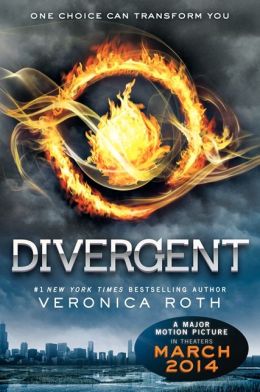
By Its Cover: Divergent

Divergent (Divergent Series #1)
First Impressions.
Wow! That looks exciting! There's fire, obviously, and it's swirling around. Plus there seems to be a storm coming, to a metropolitan city that must be just bustling with people. I'm entirely stoked! Let's read this!!!

Even without knowing it beforehand, I would say that this looks like a YA dystopia. (That might have something to do with the similarity to the mockingjay pin on the cover of Hunger Games.)
This cover intensely reminds me of The Hunger Games.  The fire and the symbol make me think that someone is just going to jump into some terribly horrific version of the Olympics.
After Reading.

The book did have some Hunger Games like moments, but at the same time, wasn't like it at all.  While the book (whose cover makes you pretty much assume you're reading a dystopia) does reflect a dystopian society, it did not have anything to do with games.  However, I'm fairly certain that the symbol on the cover is the symbol of the faction that Tris joins, which I like.  It matches her faction and it gives you a little more information that you may not have gotten otherwise.

I agree that the flames symbolize Tris's faction choice, but if I had been asked to design a cover for this book, I would have fixated on the idea of using her tattoos, or perhaps the symbols of all five factions. I like this, though; it's immediately recognizable, and it makes good sense.

Friday, February 1, 2013

ReviewMeTwice: Divergent by Veronica Roth

I know we've been crazy with the dystopias lately, but I promise this will be the last one for awhile.  This one has been on everyone's radar for so long, how could we not do it?  And to be honest, I think it's a book worth picking up.


I really like the world that Roth creates.  It's one that's not completely different from our own.  We can see references and remnants to our own world: The Sears Tower, a train system (even though the majority of the population doesn't use it), stoplights, even though most people don't have cars.  I think it really helps get you into the book more when you can point out familiar landmarks.

Roth is also a good writer.  The action scenes are interesting and believable, her world isn't too over the top and she does a great job of explaining to you how things work, how the factions work and really giving you the feel for everything through Tris and the other kids who left their factions.

However, despite this good points the book, for me at least, was extremely, extremely predictable.  There was little that Roth didn't make obvious.  I don't want to say too much here, because it would give away a LOT of spoilers, but about a third of the way through the book, I started writing down my predictions and checking them off as they came true.  Out of ten predictions I made, eight of them came true (and one still might in another book.)  If I can guess all the "big" surprises, then they're really not very good surprises.

The book also has a good ending.  It's open-ended but still gives you closure.  You could see where there would be a second book, but it's not the type of series where you HAVE to go onto the second one.  Divergent could be a stand alone.

Overall, a good book, but probably not one that I'd ever pick up again.

My Bottom Line 3 out of 5

This book filled the void that finishing the Hunger Games trilogy left in me over a year ago. (You know the feeling. The series you love so much is over, and you don't know what to do next.) Most booksellers' websites offer up Divergent as a "you might like this if you liked The Hunger Games" suggestion, and they are right to do so.

Your awesome female protagonist kicks ass but has to learn that herself before she can go about doing it. There is a budding romance that is on the peripherals of the story. Let me emphasize that again: the romance is so not central to the story. (There is a "magic of love saves us" moment, but I'll forgive it because I stayed up late to finish the book, and it made perfect sense at the time.)

This book passes the Bechdel test with flying colors: Tris talks to several other female characters about all sorts of things that are not boys.

The world Roth built is exquisite. I could get lost in it. That's my favorite thing about a dystopia: the crazy, messed-up version of the world your characters are wandering around in.

And without spoilers, I just want to express that Roth doesn't shy away from writing the Bad Things. If a character needs killing, s/he will die.

I know I'm gushing, but I just really enjoyed this book.

Friday, January 18, 2013

Review Me Twice: Unwind by Neal Shusterman

This week, we read Unwind by Neal Shusterman. The basic premise goes as follows: There was a big war in America about abortion, and the two sides came to an agreement called the Bill of Life, which decrees that abortions are illegal, but children between the ages of 13 and 18 can be "unwound," which means that 100% of their organs will be harvested and used for transplants, ensuring that they don't "die," but instead "live on in a divided state." This book follows a trio of kids scheduled to be unwound.

Why do I love this book? Two big reasons. The first is that it really doesn't matter what you think of the abortion debate; it doesn't take sides. Example: one of the Unwinds says something about having a right to their own bodies. You can see that as siding with women who want/need abortions, or you can see it as the kids having a right to live; it works either way, and better yet, it doesn't matter at all.

Second reason: Chapter 61. It gives some much-wanted details about the unwinding process, and it's extremely well-written, and that's all I'll say, for fear of spoiling it for anyone.

The only negative thing I can say about the book is that I saw a lot of things coming. This is extremely unusual for me. I don't try to figure out what's going to happen next in books or movies, because I know that if I sit there long enough, it will happen anyway, and I prefer the surprise if I can have it. I'm not saying that any of this ruined the book for me; it's just an experience I'm unaccustomed to.

I lament the fact that I have so much reading to do for upcoming reviews here on the blog, because I am terribly interested in reading the sequels.

As Alex mentioned last week, this blog affords me the opportunity to read things I would never pick up previously, or never really know about, for that matter.  Unwind is something that I probably would never have picked up on my own, but I am eternally grateful that Alex decided we should read it... because it was absolutely fantastic.

Unwind... while it touches on abortion, that's not really what it's about.  It's about choices.  It's about the person that you are.  It's about knowing what it fundamentally right and wrong.  During this book, you realize that unwinding is wrong.  Shusterman doesn't have to tell me that it's wrong; I can feel it in my gut as I read his words.

Imagine you're sixteen.  You have your whole life ahead of you.  You have friends, you have a family you love, dreams that you want and things that you want to do in your life.  And then your parents can't afford you or they decide you're too much of a trouble maker or even something as simple as they don't like the choices you're making or the future that you might have.  You might not have a future anymore.

I have to admit, there is a LOT of commentary in the book about hot topics.  Shusterman, for instances, makes a large commentary on the blind ignorance of religion.  One of our characters is sent off as a tithe.  His parents had ten kids and so Lev was sent off as a "contribution", to give back to the whole.  Yet only the extremely religious are ok with unwinding their kids.

It was a commentary on the world as a whole.  Unwinding was supposed to be a scare tactic to bring the end to a war.  Instead, it ended up being a solution to the end.  And some horrible things were agreed to, like the fact that the person being unwound was to be awake during the process.

This book is so powerful and moving and... intense, I can't describe it in a review.  I can't describe to you the wonderful writing or the incredibly dynamic characters or how this book will really make you assess your beliefs.  Pick this book up.  Seriously.  What are you still doing here?  I told you to go read it, right now.

My bottom Line 5 out of 5


You haven't left yet.

Friday, January 4, 2013

ReviewMeTwice- Starters by Lissa Price


This week's book is Starters, the debut novel by Lissa Price. (She is working on sequels!)

The background history for the dystopian society this story takes place in goes something like this: there was a big war, and a spore bomb (a biological weapon) was dropped on America. The young and the old had already received inoculation, because they were more vulnerable, but anyone who isn't a Starter (young) or Ender (old) died.

Callie - our protagonist - is a street kid, meaning that she had no living relatives once the adults were all wiped out. She is taking care of her little brother and really needs the means to improve their lives, which - of course - means she needs cash. She hears about a company that will hook a kid up to a machine that allows an Ender to "rent" the Starter's body and walk around as a young person again for a predetermined period of time. Obviously, things go wrong and important things are discovered and lots of exciting events happen.

There is a review quote on the cover that says that if you loved Hunger Games, you will love Starters, and I found this to be absolutely true. It has a lot of the same feel to it (poor girl looking out for her family is exploited by the rich, discovers big state secret and has to act - with the help of friends - to prevent disaster).

I was driven to finish the book, which is always a good sign. If you had walked in while I was reading it and asked me to come do something when I reached a good stopping point, I would not have done it until I finished the book. (That's my awkwardly roundabout way of saying it's a compelling novel.)

There were some really fascinating things that went on in Starters.  We follow Callie around as she tries to save her brother, but basically uncovers a terrible plot to hurt the teens in her world.

I always like when protagonists are independent   In Callie's world, if you're not able to take care of yourself, you're either going to be institutionalized by the government (basically worse than prison by about 1000), or you're going to be killed by others on the street.  There's no in-betweens in her world, which I liked because that theme kind of radiates throughout.  There's good and evil, not a lot of ambiguity.  There's old and young: all the the people from 20-80 have died due to germ warfare.  And there's rich and poor.  There's virtually no middle class any longer.  You're either stinking rich or you're living on the streets because no adult has claimed you.

Price creates this world not so far in the future.  Callie talks about Enders (the old people) growing up in the 1950s.  Enders in her world live to be about 200, though you get the sense that most of them are hovering in the 100-150 range.  Simple math tells us that they're living between the years 2050-2100.  Not so far in the future, really.  And Price is spectacular at showing that progression, especially in a world ravaged.  They're are things like holo-screen, projecting things in 3-d and plastic surgery is almost a given (they make Callie free of flaws before she donates her body to the elderly.)  It's very much like Scott Westerfeld's Uglies in that way.  The aged want to be perfectly young.  Everyone is done a specific way, no scars, no identifying features, really.

However, Price doesn't go to the extreme with technology.  Houses are still made out of the normal materials and are on the ground.  Cars don't fly and, other than being able to rent out someone's body, technology looks like it's progressed at a normal rate.  A world very much like ours, yet slightly different.

The only thing that really got to me was, that while I liked Callie, her actions didn't match up with the cautiousness that we know she should have.  She'd been living on the street, protecting her brother and surviving for a year.  Yet she didn't hesitate to trust not only Blake, but a number of Enders, people she swore she would never trust.

I liked the book a lot and Price is really good at suspense.  There were points I couldn't read fast enough because I wanted to know what happened so badly.  She even gave us a twist at the end to set us up for the next book, which I'm looking forward to when it comes out.

My Bottom Line 4 out of 5.

Thursday, January 3, 2013

Dystopian books

Yesterday, we told you about two of our favorite dystopian books. But we also mentioned that a large chunk of our favorite books of all time are set in dystopian worlds, so we wanted to tell you about more of them. (Many of these have been covered before, so I'll be brief.)


Uglies series (Scott Westerfeld)
I mentioned this one in my all-time favorites post, and we also discussed it when we introduced you to the author, Scott Westerfeld. This dystopia was caused by a virus that ate oil (basically). This - among other things - caused widespread panic, lots of people died... and then the cities were built. The cities in Tally's world are self-contained and self-sufficient. Tally's city has very strict rules. Kids are called Uglies because they are pre-ops. Once you turn sixteen, you get a mandatory (and coveted) operation to make you into a Pretty. This rids everyone of the need for emotions like jealousy, because everyone will get the surgery and then they'll all be treated exactly the same.


Feed (M. T. Anderson)
I also mentioned this one among my all-time favorites. In this world, everyone - almost - gets a feed installed in their brain, which allows them to connect to everyone else with the feed. (It's the internet... in your head.) It advertises to you, teaches you, helps you run your life, and facilitates social interaction. But, you find out through the course of the book, it isn't perfect.


1984 (George Orwell)
This was Cassy's pick for "favorite assigned reading." This setting is all about Big Brother watching you. Sure, everyone's needs are provided for and everyone can - and does - work, etc., but at the cost of their privacy and freedom of expression.


The Giver (Lois Lowry)
This dystopia focuses on equality (much like Uglies does). Everyone has converted to "Sameness" which means they don't really experience emotion. The story really embodies the idea that ignorance is bliss, because Jonas is given the task of being the one person in their society who remembers things. The Giver gives him memories and knowledge, and Jonas has to decide whether people are better off being blissfully ignorant or if he should share his newfound knowledge.


I Am Legend (Richard Matheson)
We touched on I Am Legend in the "Vampire Fiction" post. On one hand, it's hard to call a society of one man a dystopia, but on the other hand, [spoiler I can't mention that makes it so that "dystopia" is a more logical label]. This is your typical infection novel basis: disease is unleashed, wipes out almost everybody and turns many of them into monsters who want to kill the remaining living.


Fahrenheit 451 (Ray Bradbury)
In the world of Fahrenheit 451, firemen exist not to put out fires (we've advanced enough technologically to have houses put out their own fires) but to start them, to burn any reading material they find. Reading is illegal. People should be satisfied with the mindless drivel available through their wall screens (floor-to-ceiling televisions, essentially) and not think too hard. It's another "ignorance is bliss" story, combined with warning of the dangers of book burning and censorship.


Brave New World (Aldous Huxley)
This was the first favorite I listed on the blog, for Banned Books Week. On the surface, this is a utopia: people are specifically bred to belong to a certain caste (Alpha, Beta, Gamma, Delta, or Epsilon) with the Alphas being capable of higher levels of thought and function, and the Epsilons being barely functioning dolts who do menial work. Everyone is taught from birth to love the caste they belong to and the work they are meant to do and their station in life. The words "parent," "mother," and "father" are taboo, dirty words, because nobody has parents; they are all grown in test tubes. Socialization is vital, and anyone who is standoffish or solitary is considered unusual and potentially dangerous. Change is bad, difference is bad, and thinking is definitely bad.

Bonus dystopia:

Divergent series (Veronica Roth)
Neither of us have actually read this series yet, so we can't say much about it. But it didn't feel right leaving it off the list, because it sounds really good, and everyone we know who has read it, loves it. From what I have culled from synopses and reviews, teens in this world compete to belong to one of a number of factions, each dedicated to a particular characteristic. Our protagonist has to choose between following her family's tradition or being her true self.


Player Piano (Kurt Vonnegut)
I also haven't read this one, but my sister gave it to my brother for Christmas and said it's one of her favorites, plus I like Vonnegut in general, so I thought it was worth mentioning. This dystopia covers the mechanization of labor (eliminating the need for humans in that field) and the chasm between upper class and lower class created by this development. It has also been published under the title Utopia 14.


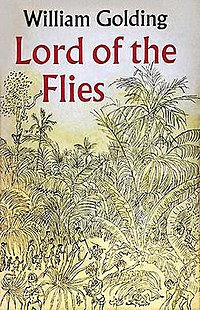
Lord of the Flies (William Golding)
(Cassy has read this one; I have not.) This is a little different from the other dystopian settings, in that this one is more of a microcosm. Typically, dystopian fiction discusses humanity or society as a whole, but Lord of the Flies focuses specifically on a group of boys who are stranded on an uninhabited island. (It does take place during a nuclear war, so these boys' situation is connected to world-wide problems, but that isn't the focus of the book.)


The Running Man (Stephen King)
This is a dystopian story about the huge difference between the upper and lower classes. No matter how much you want it to be, it is not about the dangers of reality television. It does employ reality television as a tool for exploiting the lower class for the entertainment of the upper class, but reality TV did not cause the problems in this dystopia (no more than it does in the Hunger Games universe, where it is, again, a method of using the pain of the lower class to provide entertainment to the upper class). I'm not defending reality TV, because I think it is just awful, (like most popular television programming) but it is created by people, just like these fictional dystopian settings are caused by people (albeit fictional ones).

This is, by no means, a complete list of dystopian fiction (or even a complete list of all the dystopian fiction we highly recommend). It's just a sampling. If you have further recommendations, we would love to hear about them in the comments, or tweet them @ReviewMeTwice!

Wednesday, January 2, 2013

Dystopian Favorites

Alex and I actually were talking before this post and really trying to suss out our favorite dystopian books.  As we started listing dystopian novels, we realized that there were just so many!!  I mean, some of my most favorite books are dystopias.  However, I think I've narrowed it down to a favorite.


This is the version of The Handmaid's Tale that I own.  It portrays the outfits that women wear in the book, marking them as "breeders."  Basically, they were the only women who were fertile and are handed off to multiple men to try and have babies and repopulate the world.  However, I think it's important to also show this cover:


Women in Atwood's novel were meant to be silent.  They weren't supposed to have interactions with the husbands (though, not THEIR husbands.)  They were not to talk to people, not to go anywhere without an escort.  Their only job was to be a baby-maker.  What's more, is that the world came INTO this.  Women had jobs, families, lives and freedoms not ten years before.  In fact, Offred, our main character, can remember when she was married and in love and made love as opposed just to being knocked up by whomever happened to own her that month.  Women are no longer along to read or have opinions or anything.  All because of wars and declining fertility.

It's a very powerful novel, making you see how easily people can be affected by a change in the status quo, a threat that the human race will come to an end.  Atwood also demonstrated how easily things can revert back to a time when women had no freedoms, when really, no one had any freedoms.  The fact that Atwood's writing is fantastic makes this a book that must be picked up.

Like Cassy, most of my favorite books are dystopian, too. But one of my big favorites is one of the best dystopian series for teens in recent memory: The Hunger Games.

Maybe you've heard of it?
I chose to write about The Hunger Games because, of all the dystopian novels I have read, it has my favorite dystopian setting. I love a lot of things about these books, but the biggest one is the world Suzanne Collins created it in. (You know how lots of people say the Lord of the Rings books were just a vehicle for Tolkien to describe an amazing world with detailed languages he invented? Well, they say that. This is kind of like that, except I like Collins' writing far better than Tolkien's.)

If you aren't familiar with the series, I'll give you the history. Panem, which is a post-apocalyptic North America, is divided into thirteen districts and the Capitol. District 13 was crushed by the Capitol as an example to the other districts, as punishment for rebelling, bringing an end to the Dark Days (a rebellion against the Capitol's power). The Capitol has complete power over the poor districts, as demonstrated by the annual Hunger Games, wherein one male and one female between the ages of 12 and 18 from each district are chosen at random to compete in an arena (a new one is built each year with different dangers and challenges) to the death, with only one tribute (contestant) surviving. The winners go on to mentor the tributes  from their district in future years. It's all a way for the Capitol to say "we own you" to the districts, and it works (for 75 years, anyway).

There are a lot of details I'm leaving out, either because they're spoilers or because I would have to mention spoilers in order to properly explain them. But to sum up why I love this dystopia so much: the clash of the decadence of the Capitol and the squalor of the districts (well... most of the districts) is such an excellent contrast, and it's portrayed so well. That's how you build an excellent dystopian novel: a solid setting with a great backstory and thoroughly explained difference between the haves and the have nots.

Monday, December 31, 2012

Dystopia- What is and Isn't


This week, we're reading Starters by Lissa Price, a definite dystopia.  So what really makes a book fall into the category of dystopia? 

This is one of those times I get to apply real life experiences to this blog.  Just over a year ago, I was working on a NaNo novel with zombies.  At the time, I worked with a bunch of engineers (they were all ridiculous smart and so I felt really dumb on a daily basis, despite my bachelors degree and being well read.) So I was telling some of the engineers about my novel and described it as a dystopia.  

To which the response was, "What's a dystopia?"  The fastest way to explain was, "The opposite of a Utopia."  That's the day I was Smarter Than an Engineer.

However, dystopia is so much MORE than that.  For instance, especially in literature, there's no such thing as a true utopia.  Usually, we see a utopia at first, but then we discover "at least one fatal flaw" as Wikipedia explains it.  The Giver is a great example of this.  We know that everyone is equal and everything is the same and there are no colors or really, anything exciting.  We soon learn that no one gets old because they're killed before they can get too old and no one has any choice.  Fatal Flaw.

Dystopias also can include governments that control everything.  They're governments that control every last aspect and make their subjects fear death on a daily basis, and that's how they keep control.  The most widely known example of this is 1984, and all where the reference "big brother is watching" comes from.

Sometimes, dystopias just involve a lot of bad luck, or some major event happening, putting a huge economic gap in the world.  Whether it be disease or nuclear holocausts.  Octavia Butler's Parables series has this set up.  The world has fallen into economic and natural ruin, and so they are constantly on the run, constantly worried about being attacked.

We have even see examples of dystopias in real life.  If you think about it, the Holocaust, in its most early years had many characteristics.  It seemed as if Germany was improving vastly economically and that Hitler was doing a lot of good for the country... until of course everyone found out that he was murdering Jews, African-Americans and the disabled, trying to create a "perfect" world.

This is part of what makes dystopian novels so very scary: we can easily see them coming true.  That was the entire premise of 1984; Orwell believed that just thirty years after it was published, the world would be controlled by the government, like it was in his novel.  In fact, the most prevalent discussion of the book is if our society has become the one Orwell painted in his novel.