Showing posts with label memoirs. Show all posts

Friday, May 8, 2015

Review Me Twice: Hack by Melissa Plaut


I really enjoyed this book. I like autobiographies and memoirs because it's like having someone tell you stories over drinks (if it's written well). I can picture Melissa Plaut sitting at a table with me, starting each chapter of this book with, "Oh that reminds me of the time..." or "You wouldn't believe this one thing that happened..."

To be entirely honest, I never thought much about what it's like to be a New York cab driver, because I've only ever met two of them (LaGuardia to my hotel and the return trip when I went to New York Comic Con last October). They were both really nice and I made sure to tip well, and the guy who took me back to the airport showed me the UN building on the way... beyond that, it's not something I've ever dealt with. So not only was this book interesting and funny, but it showed me something new that I hadn't thought about before.

I also feel very much like Melissa Plaut is a real person. You know how sometimes, someone writes from their own point of view and you can just tell that they're molding the story to make themselves sound a certain way (be it more moral or smarter or in the right all the time)? I didn't get that from this book. Even in stories where Plaut clearly feels that she was right, she seems to realize that the reader may disagree. It's like having a friend tell you about a traffic incident they were in, and you may know they did something stupid, but it doesn't matter. I hope that makes sense.

One thing I really didn't expect from this book was to feel emotional connections with some of the other people (it feels weird to refer to them as "characters" because they're real people out in the world somewhere). I want to give meet Helen and give her a hug. I want to hear some of Allie's stories about her own job and life. I want to avoid some of the guys from the garage, or hang out with some of the others.

I picked this book up at this huge discount bookfair that I go to about once a year.  It's about an hour and a half from my house, but I never walk out with less than like four books (and usually more towards ten), and it's always worth it.

I paid a big four dollars for Hack, picked up on the recommendation of a friend.  And oh, what a great one it was.  Hack is surprising for a number of reasons.  One, you wouldn't think driving a taxi would be all that entertaining, but the amount of people that you meet doing the job is unprecedented.

Two, I LOVE the picture that it paints of NYC.  NYC is one that, sometimes, gets such a bad rap, when really, it's such an amazing city.  And I love that there were so many stories, so many experiences in her book that show what a GREAT place it is.  At one point, she talked about the Public Transit strike and this mood the city got, this comradery, that you can only get in NYC, but when you get it (and it's rare), man is it unlike anything you've ever felt.  There are some experiences, I feel that can only happen in New York City.

The part that surprised me the most those was the kind of stress this job takes on you.  I mean, she got to the point that she was angry ALL THE TIME.  It would seep into her very bones, into her being, and the hair trigger of her job was seeping into her very life.  Cabbies are the bottom of the barrel, the lowest of the low in NYC, for no real reason.  So they get hassled the most, and targeted by cops the most, and looked down on by customers the most and really just take the most amount of crap.  Eventually, it all just kind of builds up and explodes.

It's a great memoir and really well written and one you can breeze through pretty easily.  It's really a lesser known book, so I really like to let people know about it as much as possible when I can.

Don't forget to enter our contest!!!

Also, just for clarification, if you don't enter through the rafflecopter widget below, you're not actually entered.  It's the only way we can keep track!  (rafflecopter is telling me no one has entered and I know this is, in fact, not true, so I just want to let you guys know.  If you HAVE in fact been doing this all week through rafflecopter and it just hasn't been working, PLEASE EMAIL US with the amount of entries you should be credited at reviewmetwice [at] gmail [dot] com.)


a Rafflecopter giveaway

Friday, March 28, 2014

Review Me Twice: The Diving Bell and the Butterfly by Jean-Dominique Bauby


Do you ever read a book - particularly a memoir or autobiographical piece - and think, "I don't think I would be friends with this person"? I've had it happen before, and I'm sure it'll happen again, but it happened with this book. I don't think my personality and that of M. Bauby would mesh well. But that doesn't have to be the case for me to enjoy his book.

And I kind of did. Having been a French major, I've read quite a bit of French writing from many different time periods, and there's just sometime distinctly French about a lot of it. This book is written in a very French way. Which is neither a good thing nor a bad thing. It makes you feel a little more like you're reading one of the classics, if that makes sense. There's just some combination of word choice, sentence structure, and some abstract sense of how the story is told that just creates this feeling of French-ness in the writing. I'm sorry I can't explain it better than that.

As far as content, I quite enjoyed the stories Bauby tells. I like fresh perspective on the mundane (as long as it doesn't go overboard) so reading about how Bauby saw his room, the beach, the tiny things that are different or difficult or impossible for him that you might never even think of when considering the ramifications of locked-in syndrome... these were very interesting to me. When he goes more into his opinions of things and farther-reaching topics or details of his past... this is where his personality comes out more and I get less interested. But there's a good balance between these things, so I managed to stick with it (it's only 132 pages, divided into small chapters, so it wasn't a particularly daunting task).


I was expecting this book to be a lot more insightful, a lot more touching, a lot more hit you in the gut.  It wasn't any of those things.  Honestly, it wasn't even all that INTERESTING.

Bauby goes off into a lot of tangents, a lot of imaginings and memories, but he does it in such a way that I don't really tune into them.  One minute he's talking about being trapped and watching TV and the next he's talking about walking on the beach and I'm thinking, "I didn't think he could move."  He's made the transition and I didn't follow it because my brain zoned out.

The only thing that really stands out in my mind is when he was taken out with his nurse and an old friend and they were talking about knowing him "before" and "after."

I understand what a labor this must of been for him to write.  I mean, he could only communicate with his left eye.  Imagine communicating a whole book to someone with only the ability to blink.  But the book just wasn't that interesting, wasn't that engaging, and not nearly as inspiring as it was hyped up to be.

Wednesday, March 26, 2014

Favorite Memoir

We've had a lot of memoirs on this blog up for review, so I thought it was about time that we told you what our favorite memoirs are.


I've mentioned this book more than a few times on this blog, but I feel like it bears mentioning again.  Holocaust stories are usually really depressing, and while I wouldn't immediately throw this one into the uplifting category, it certainly is a lot more hopeful than most of them.  Also, it's not strictly a Holocaust story.  Ligocka was extremely young when the Nazis came into her country (as you can tell if you know anything about her.  She is the famous splash of color in Spielberg's Schindler's List.)  She was only about 5-8 when the war was going on.

It continues into her teen years when she's living in the USSR and all the horrors she has to face as things go from hopeful under Lenin, to dangerous and scary under Stalin.  It's like she could never really escape the horrors.  I like it because we tend to focus on the Holocaust so intently and forget that places like Poland were almost immediately plunged into the Cold War.

It's also well written, honest, beautiful and just so heartfelt you can't help shedding a little tear at the end.


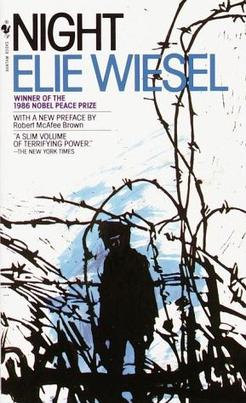
Hey look, my favorite memoir is also from the Holocaust! I read Night in 8th grade English class, and I loved it. I liked the way Wiesel described things (from his fond memories of early childhood to the unspeakable horrors he endured and witnessed). That's really what my enjoyment of the book boils down to: Wiesel's description and explanation, which is simple and straightforward. He doesn't flower things up, or exaggerate. (Really, I don't think Auschwitz calls for exaggeration; it was bad enough as it was.) And I may just be attributing the feelings I got from learning about the Holocaust for the first time to Wiesel's writing, but I don't think anything in a book has chilled me as much as reading the phrase "arbeit macht frei" in his introduction to Auschwitz. I think he did a good job of making it feel real and hit home, and that's what a good book about a bad thing should do.

Monday, March 24, 2014

Author Bio: Jean-Dominique Bauby

Are you ready for a fascinating story? Good, because I've got one.


This is Jean-Dominique Bauby. He was born in 1952 and was a well-respected French journalist and author, and was editor of the French ELLE magazine for a time.

In 1995, Bauby suffered a stroke and was out for twenty days. When he woke up, he discovered that he had locked-in syndrome, which is a condition where one's mind is completely left unharmed, but almost all of the body is completely paralyzed.

A dictation machine was brought in for Bauby, and he was able to write The Diving Bell and the Butterfly (in the original French, Le Scaphandre et le papillon), his memoir, using it. The machine worked by cycling through the alphabet in order of frequency of use in the French language, and when it got to the letter Bauby wanted to put next, he would blink, and it would record that letter. The memoir was published in March 1997, and it was translated to film in 2007.

You've probably guessed by now that we'll be reading The Diving Bell and the Butterfly this week! Look forward to that on Friday.

Friday, October 11, 2013

Review Me Twice: Can You Ever Forgive Me by Lee Israel


So, in theory, I should really dislike this woman.  I mean, she made money for years off of imitating the letters that other writers wrote.  When her writing career took a nose dive, she started drafting up a litany of fake letters, supposedly written by a whole lot of dead people, but were really just her creations based off of real letters that she read in libraries.  (And, to be fair... I DO kind of hate her because she got a slap on the wrist and she's not even sorry.)

And when her fakes were starting to get exposed, she started STEALING the real copies & replacing them with fakes.

Terrible.  Absolutely terrible.

And yet... you can't help feel that she had an inordinate amount of FUN writing these people... these characters, really, because that's what they were.  They were characters.  It was like the earliest form of fan fiction.  And while she greatly regrets the fact that she stole the originals (which, to her knowledge, have all been returned to their respective libraries), she mentions that she can't help but love those years she was forging letters.

It's a fast and interesting read.  It gets right into the nitty-gritty; not a lot of preamble with Ms. Israel.  I kind of liked that.  I didn't really have to wait to find out what happened and what she did.  However, I also realize that her writing style is not going to be everyone's cup of tea.

My Bottom Line 3 1/2 out of 5

Do you know any of those people who name-drop like crazy, thinking it makes them sound important even though you don't recognize more than half the names they're saying? Or maybe you've met someone who expects you to know who they are, or know things about them based solely on their name, except you don't know who they are, and they won't offer up any information about themselves that might help you figure it out? Ooh, I know... perhaps there's someone you know who gets in trouble for something, and even though they claim to know that what they did was wrong, and they might even say they deserved to get caught, they still say their punishment was BS and they have a generally blase attitude about the whole process of serving justice?

That's how I feel about Lee Israel. When I first heard about the book and read a summary, I thought, "Wow, this should be really interesting... she did all these great forgeries, got caught, and learned her lesson, and now she's writing about it." And then I read the book.

I understand that there are some people, like Estee Lauder and Bette Davis, that should need no introduction. But I can count at least twenty names in the first dozen pages that I don't recognize (and therefore don't care about). I can only assume that Israel is writing this book for the very narrow audience of the people she directly impacted with her crimes.

And the way she talks about why she committed forgery, how she got caught, and what it was like being punished for her crimes, it makes me feel like the title is sarcastic. "Oh, could you ever forgive me for committing such horrible crimes that totally weren't as bad as everyone made them out to be?" Maybe I'm misreading the tone, but that's what I'm walking away with.

Saturday, August 17, 2013

By Its Cover: Beautiful Boy


I didn't pay close attention to this cover before I started reading the book. (For such a visual person, it's surprising how often that happens to me.) If you had asked me what it looked like, I would have just said it was a white background with plain text in the middle. I didn't really notice the jumping boy off to the side.

When I did notice it, though, I thought it was good design. You don't see a face, so it could be anyone (though it's pretty obvious it's supposed to be Nic). He clearly looks joyful, and young, which is something David likes to remember: the simple happiness of his kid's youth. Except the photo does that without sounding really flowery like I just did.

I like the cover a lot.  I like that the kid is off to the side, running, because I think that's exactly how David Sheff felt: Nic was running away from him.  His childhood disappear, NIC disappeared and became this elusive, unreachable thing.

Friday, August 16, 2013

Review Me Twice: Beautiful Boy by David Sheff


I can't help but feel like I've read this story before... oh wait, I have. It was kind of interesting seeing the "other side" of Nic Sheff's story, but I just didn't feel like there was enough new information to make it worth my while. I understand that both David and Nic wanted to work through their version of the events and get them on paper and share them with the world... but personally, I didn't need to read both. Maybe if I were an addict, I would identify better with Nic. Or if I were the parent of an addict, I would have more feels for David. But I find myself more attached to Ellen Hopkins' characters than I did to either of these guys.

While I liked David's writing style more than Nic's, it was only by a little bit, and it still wasn't enough to really grab me, especially when I knew the basics of the story already.

However, I would recommend this book to any parent of an addict or someone in a similar situation. I think David Sheff speaks honestly and doesn't get too flowery or pretentious about the whole thing. He seems to honestly want to write to tell his story and hope that others can benefit from his experience.

This is the first time on this blog that I haven't finished the book (though... I'm in the last third, so I'm pretty damn close.  About 50 pages.)

The big, huge, glaring flaw with this book is that David Sheff gets crazy technical and overly informational about drugs and what happens to people on drugs and all the effects of drugs on the body and families.  Which makes sense, but got to be a little much, making me not really want to read the book.

I also wanted to read about David's point of view about the time that Nic talks about in his memoirs.  I wanted to see the two stories coincide.  But it's in the last third that David talks about Nic's memoir (Nic covers his final, and probably most severe, relapse with drugs.)  He really glazes over it to because, for David, it's just another round of Nic being on drugs and doesn't really differ from the rest of them.

I did think the story is well written and you do feel so sorry and terrible and you really understand how hard addiction can be on the family but... eh, I was expecting the stories to interact more than they did.

I'm with Alex, though.  If you have a family member who has a drug problem, this is probably a book that would be good for you.

My Bottom Line 2 out of 5.

Friday, June 7, 2013

Review Me Twice: Tweak: Growing Up on Methamphetamines


Have you ever seen the first several scenes of Trainspotting? There's a lot of drugs, discussion of the side effects of taking those drugs, and not much else. I was bored by it.

I was worried that this book was going to wind up like that. The first half of the book is about Nic's relapse after several attempts over the years to get sober. We watch him spiral down, down, down, and make so many mistakes he's made before.

Luckily, part two is about his recovery. I liked that part way more. Something about a drug addict talking about doing drugs is just... I don't have the right adjective. It's something of a mix between uninteresting, uncomfortable, and something I can't relate to very well, with a lot of that feeling you get when someone is bragging about something you don't admire (like, if you know nothing about motorcycles and this guys is talking about his awesome bike for like twenty minutes and all you can do is nod and go "yeah... sweet, I guess").

There aren't a lot of surprises in this book, but there don't really need to be. Sometimes you'll want to yell at Nic for being an idiot, sometimes you want to give him a hug and tell him he can do it, and sometimes you just don't understand him. It's not a new story, but I like Sheff's personal details.

I enjoyed the book, but it's not one I could read over and over.

I had the opposite reaction that Alex did.  I liked the beginning because it was freakin' SCARY.  I mean, I've read a lot of drug addict memoirs but this one... I don't know.  There was something about it that was just so personal; so incredibly frightening.  Nic kept shooting drugs over and over and the amount times he black out...

He also returned to drugs so easily.  You just felt so sorry for him.  You knew, deep down, he wanted things to get better but just couldn't seem to hold it together.

His recovery... ehhh, he got really preachy.  I mean... REALLY preachy in some points.  Which makes me not want to read it.  But I liked that it ended hopeful.  And I like that we got to see something that wasn't the twelve step program.  That doesn't work for everyone (it certainly didn't work for Nic), so I like that he's kind of showing that there are alternatives.  That failing with the 12 steps doesn't mean you're a failure.

However, I do agree with Alex that, while a good book... not one I would probably ever pick up again.

My Bottom Line 3 out of 5

Thursday, June 6, 2013

Memoir: Autobiography with Artistic License

When I read Nic Sheff's introductory disclaimer of sorts to Tweak, I had to remind myself: "This is memoir, not autobiography." But what's the difference?

Memory


"This work is a memoir. It reflects the author's present recollections of his experiences over a period of years."

Those are the first two sentences of Sheff's Note to Readers that precedes the story. This part emphasizes that Sheff could very well be one of those unreliable narrators I told you about last week, and the facts of the story are only as solid as his memory of them. (Considering this is a memoir of a young man with a very serious drug addiction, this is important to keep in mind.) This is the part of memoirs that distracts me while I'm reading dialogue. Part of my brain that I can't shut off keeps asking me, like a pesky kid at a movie, "How does he know that's exactly what he said? How can he put a line of dialogue in quotation marks instead of saying 'we argued about the drugs' when he can't possible perfectly recall the wording?" The point is, it doesn't matter exactly how things were worded or precisely where someone was standing in relation to others, but having read the memoir disclaimer, this was important to the annoying, distracting part of my brain.

Anonymity


"Certain names, locations, and identifying characteristics have been changed, and certain individuals are composites." 

This is the next part of the Note to Readers, and the part that bothers me once we've been around a character for a while. When Nic has sex with one girl, I wonder if he's compiled several months' worth of trysts into one. When he starts selling meth with one friend, I wonder if there was a whole group working on it. When he describes a celebrity friend's features, work, and connections, I wonder if I'd be able to identify that celebrity with some Googling, or if those details are all made up (and if they are, whether they're similar to the truth or just totally out of left field). I completely understand why "names are changed to protect the innocent/guilty" but it's distracting.

Memoir Vs. Autobiography

You see, memoir is not an autobiography in two big ways.


First, memoir focuses on a slice of the author's life - one event, facet, or perspective - whereas an autobiography is meant to encompass their entire life up to that point: the pie as a whole, if you will.

Also, memoir gets more artistic license. In a memoir, you can change names and combine similar events to get the story moving and omit characters or scenes that don't directly relate to the event or facet you're trying to portray.

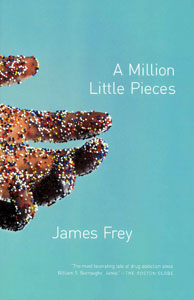
A Million Little Pieces.jpg

Remember the controversy over James Frey's A Million Little Pieces? If you don't, here's the meat of it: he took a little too much artistic license for a memoir. It was originally published and marketed as a memoir, but people found out that too much of it was fictionalized, so now it is a "semi-fictional novel." Really, the whole thing may never have been such a big deal if Oprah hadn't made this her Book Club book.

What Oprah said about the scandal was, first, that she was sorry to her fans and she felt like she had betrayed them, but beyond that, the book was still helpful for recovering addicts, and you can't let the fictional parts get in the way of that.

And that's where memoirs and autobiographies have something in common (other than being based - to some extent - on the author's life): they are usually written to teach or help others who find themselves in similar situations to those the author has faced and written about.

Tuesday, June 4, 2013

Re-memoir Me

Tweak, our book this week, is actually Nic Sheff's memoirs about his struggle with drug addiction.  There are more than a few memoirs out there to read, some better than other.  So I'm just going to give you a few that have stood out over the years.

The Girl in the Red Coat by Roma Ligocka


I know I've mentioned this book a few times on this blog, but that doesn't stop me from loving it.  Written after seeing herself on screen in Schindler's list, Ligocka revisits her harsh and frightening past, during both the Holocaust and the Cold War.

It's touching and heartfelt and sad and wonderful and if you don't cry a little at the end, I'm pretty sure you have no soul.

Tuesday's With Morrie by Mitch Albom


We've already reviewed Mr. Albom on this blog, but the thing with being a good author is that you tend to crop up a lot.  Tuesday's With Morrie is Albom's recounting of his time with an old professor.  After hearing about his teacher's illness, Albom visits him every Tuesday, learning from him once again.  It's touching and sad and wonderful and Albom's writing is just phenomenal.
 
Persepolis by Marjane Satrapi
 
 
Really, I could throw Maus in with Persepolis, but A. Maus is technically not a memoir (it's a son writing about his father's experiences) and B. we JUST heard about Maus last week (whereas, it's been awhile since we've talked about Persepolis.)  Satropi talks about her life in Iraq during the 80s and the war that ensues there.  She talks about how it effected her life, and the decisions she made (bad and good) due to the situation in her county.
 
Really, the thing that makes it unique however, is that it is told as a graphic novel, something very unusual when it comes to people writing about their lives.

Some Assembly Required by Anne Lamott


I have not read this one, but a lot of people have recommended it.  And Anne Lamott wrote Byrd by Byrd, which is pretty much the best novel on writing you'll ever read in your entire life.  So I don't have any problems recommending this to you.

It's about Anne becoming a grandmother.  A book about her son (who she wrote a memoir on called Operating Instructions) having a kid.  She talks about the trials, advice and crazy situations that becoming a grandmother is all about.

Anne Frank: Diary of a Young Girl by Anne Frank


What list of memoirs would be complete without the girl that, seemingly, started it all?  We all know (and have probably read) Anne's diary, written while she was trapped up in an attic, hiding for her life.  She talks about boys and getting her period and all the things she misses from before the war.

While very obviously written by a 13-year-old girl, you can't help but be moved by this story.

Monday, June 3, 2013

Author Bio: Nic Sheff


This week's review book is Tweak: Growing Up on Methamphetamines by Nic Sheff. It's his memoir of his time recovering and relapsing (and recovering again) from his drug addiction.

Nic is the son of another writer, David Sheff, who has written for many publications, including The New York Times, Rolling Stone, Playboy, and more. David also wrote a book about his perspective on Nic's struggles with addictions, called Beautiful Boy: A Father's Journey Through His Son's Addiction, which sprang from an article he wrote for The New York Times called "My Addicted Son." More recently, David has written a book called Clean: Overcoming Addiction and Ending America's Greatest Tragedy, which offers advice and comfort for the loved ones of addicts at every stage of the process.

Nic has also written another book about addiction, called We All Fall Down: Living with Addiction, which is about his continuing efforts to stay clean.

Nic Sheff is currently working for "The Fix", a site (as the name suggests) about recovery, rehab, and addictions.  It focuses on finding a solution to addiction and helping its readers recover. You can find a list of Sheff's articles here.  As always, we encourage you to check out his twitter, where he seems to post pretty regularly.