Monday, July 21, 2014

Author Bio - Julie Maroh


This week, we're reading Blue is the Warmest Color by Julie Maroh (a graphic Novel, so you know it was Alex's week to pick. ;))

Maroh is actually French, and the book has been translated into English (and a few other languages).  The original title is Le bleu est une couleur chaude. Blue seems to be her first book, one that she stated writing when she was 19 years old.  It has been adapted into a movie and won an award at the Angoulême International Comics Festival in 2011.

Maroh is currently living in Angoulême, France.  This is her website, but it's in French, so unless you know French, it's unlikely you'll glean much from it.

Friday, July 18, 2014

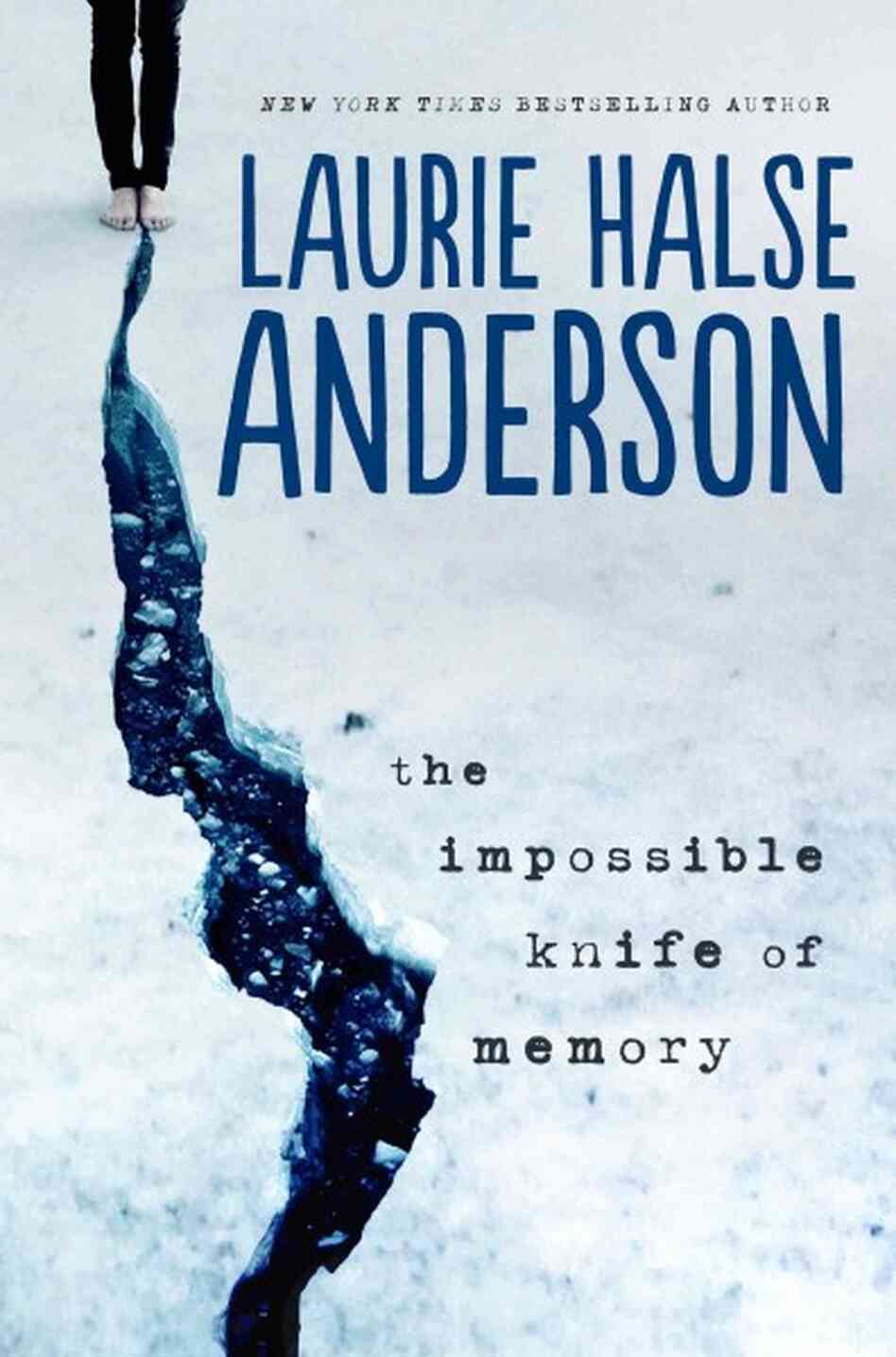
Review Me Twice: The Impossible Knife of Memory by Laurie Halse Anderson


I like Laurie Halse Anderson. I liked Speak. I liked Fever 1793. I haven't read Wintergirls yet, but I bet I would like it. I also liked The Impossible Knife of Memory. I wrote all those redundant sentences for a reason: to emphasize the word "like." I don't love any of it, but I like it.

I was excited about this one... It's dark and scary in the "this happens to real people all the time" kind of way like Speak is. It calls attention to something I think is important and under-discussed (PTSD in veterans and how it affects them and their families).

I was totally with you, Laurie. I was. We were going great... and then the romantic plot (I can't decide if it's a "subplot" or not because it sort of takes over the whole book) started to feel way more girly than your protagonist has acted. Which I was cool with, in the sense that people change, especially when they're caught up in their first romantic relationship. And then... happy ending? What was that? I expected heart-wrenching and devastating. But maybe I just miss Game of Thrones. Still... what a weirdly misplaced-feeling happy ending.

Laurie Halse Anderson is an incredible writer.  Speak probably makes the top 10 of my favorite books because it was so well done (though, I admit, does hit you over the head a little with the tree symbolysm.)  Wintergirls was also incredibly well done.

And while I did LIKE The Impossible Knife of Memory, it just wasn't up to parr with her other works.  The characters were interesting, and I like that she isn't afraid to take PTSD on (because, let me tell you, I don't think we do NEARLY enough for our Vets and PTSD frequently isn't taken seriously and said Vets are referred to as sissies, or less tough because they're traumatized by their experiences.  Which is DUMB.)

I agree with Alex about the miss-placed ending and the romance though.  It kind of throws the book on a weird track and I'm not really sure if that's where I wanted to go.  There were some great moments with Hayley and her father, though.  Both scary and heart-stopping, and some incredibly wonderful.

Over all, I enjoyed it, because Anderson is just plain a good writer, but it certainly wasn't my favorite book by her.

Thursday, July 17, 2014

Flashbacks

You may remember when Cassy talked about amnesia in literature. But today, I'm going to tell you about when characters do remember things.

Good writers know where to start their story, and it's never the actual beginning.


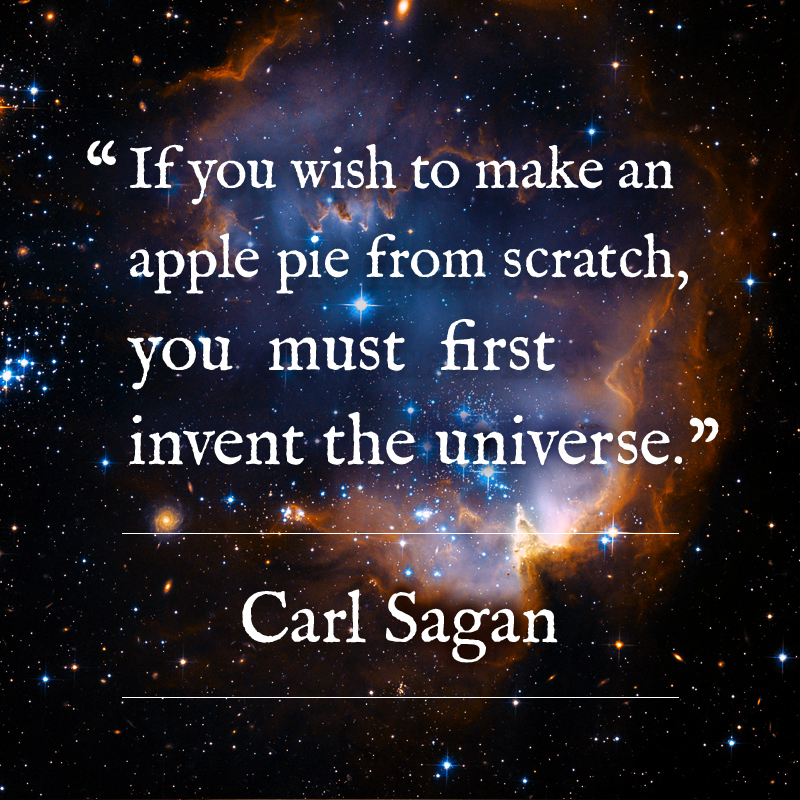
I think of this quote when I try to decide where to start a story.
If you really started "at the beginning," then you'd be
first inventing the universe. And nobody wants to read all that.

Which means we need to rely on methods other than starting at the beginning to tell us about the things that happened before page one.

Analepsis is the fancy word for flashbacks. If it's an internal analepsis, we're looking back on something that happened earlier within the narrative (something you've already read). External analepsis flashes back to something that happened before the story started (something you didn't get to read about).


There are many ways to present flashbacks. Maybe they'll come as a dream about something horrible in the past, like when Scott Pilgrim dreams about Envy Adams.

from filmscriptwriting.com

Sometimes characters just talk about something that happened in the past. If you're bad at dialogue, you should not attempt this as an exposition tool... people just don't have conversations like, "Hey, remember that thing we did on [date] in [place]?" "Oh, hey, yeah! That was when [person] did [activity] which caused [emotional response]!" Okay, sometimes we do. But it can look awkward on the page.

Side note: Are you guys as stoked about Maze Runner as I am?!?

Or you can get creative with your flashbacks... stories in the fantasy or sci-fi genres can use magic or technology to find ways to bring up memory or dreams or thoughts. You can find a reason to call back a character from the past, and in introducing them to newer characters who didn't know them, you can get a lot of details out. You can use the amnesia tactic that Maze Runner used, and anything leading up to page one has to be explicitly explained to the protagonist (and therefore to the reader).

Wednesday, July 16, 2014

Favorite Book with a Flashback


Walk Two Moons has always been one of my favorite books.  It's really a book for all ages kind of book, because the girl is 12, so she's not quite a teenager, but she's not quite a kid anymore, which I think just makes the book all that more relatable.

Sal is going on a trip with her grandparents to see her mother (and Sal is going to try and make her come back, though she doesn't tell her grandparents that.)  Throughout the whole trip, she's telling her grandparents about one of her friends, whose mother also left, though for different reasons than Sal's mother.

Through these flashbacks we see the parallels to Sal's life, and Sal's troubles.  She also tells the reader about her life with her mother, and all the things that she grew up with and the places that she used to go.  Inevitably, the story takes place m
ore in the past than it does the present, but it is wonderfully balanced and incredibly written and definitely something that should be read by everyone.


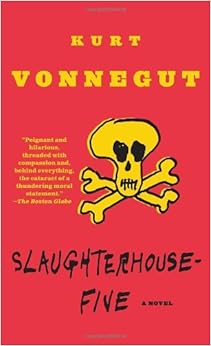
Kurt Vonnegut's Slaughterhouse-Five doesn't have so much "flashbacks" as it does "flash-arounds" because the timeline is all jacked up. The protagonist doesn't really stay in a linear timeline so you don't really know when the "present" is. This is the only Vonnegut book I've read, so I can't say whether I'm a fan of his in general, but I do think this is really excellent writing. I can't imagine trying to keep track of everything while writing like this, and I'm impressed, to say the least. There's just something about being able to reveal the right information at the right time that I don't have the hang of, and it's even more difficult when you've basically thrown your story's timeline into a blender and are reaching in for bits and pieces while it's still on.

Monday, July 14, 2014

Author Bio: Laurie Halse Anderson


Laurie Halse Anderson writes YA and youth fiction about hard-hitting issues. She is celebrated for her ability to face sensitive topics head-on without sounding preachy, didactic, or awkward. She accomplishes this real, honest voice by responding to every single message she gets from a teen (email, letter, whatever) and listening to what they tell her.

Speak (1999) (which you may recognize from the Kristen Stewart movie if not from the book) touches on several difficult topics, but centrally, rape. Wintergirls (2009) focuses on anorexia nervosa and bulimia. Even in her books that aren't problem novels, like her historical fiction novel Fever 1793 (2000) the protagonist has to deal with death and other issues.

This week's review book, The Impossible Knife of Memory (2014), deals with a parent who has post-traumatic stress disorder.

Friday, July 11, 2014

Review Me Twice - Jaina Proudmoore: Tides of War by Christie Golden


So part of the reason that Alex picked this book this week was because she wanted to know how the book holds up to a non-WoW player (that would be me.)

And, honestly, it wasn't terrible.  I got the big conflict and the creatures were all pretty stereotypical fantasy characters (Orks, Elves, etc.)  I know enough of about WoW to know who the "bad" guys and "good" guys are (Horde vs. Alliance), but that's as far as it goes.

I think there was a lot before this book that I didn't know about.  They kept referring to all these battles/conflicts that happened before the book and, honestly, I don't know if they're something that happened in the game, or if they're events I could find out about if I had picked up the series at the beginning.

I also didn't recognize anyone.  I get the feeling that, were I a WoW player, I would know who Jaina Proudmoore is and why she's important and who the Horde people are and... just generally what everything thing is and what it means.  There were a lot of words thrown around, taking for granted that the reader already knew it.

Overall, it the book was fine, enjoyable to read, but I feel like as a non-WoW player, I missed a lot of references and plot points in the book because I just didn't know.

I think it would have been helpful to have my husband read this book as well, because then we'd have the full spectrum of WoW familiarity. I play, but let's face it... I just got my first level 90 last week. I started playing shortly before Cataclysm dropped, but my husband started in vanilla, and he actually reads the quests he's accepting... I just sort of skim until I get to the number of objects I need to collect or the name of the guy I have to kill or talk to or throw a turnip at or whatever.

I had a vague familiarity with a lot of the characters and battles and history, but if the book didn't bother going into detail, I just assumed it wasn't important. And that technique worked really well for me. I don't think I'm missing much by doing that, and if I want all the details, I can go back and read all the other WoW books (or pay closer attention while I level my shadow priest).

The biggest surprise with this book was when I noticed the "New York Times best-seller" sticker on the front. I never would have guessed that. But either that means the vast majority of the 7 million players read the book (which I don't think is true) or it means the book works as a stand-alone story without having to earn the Loremaster achievement.

Thursday, July 10, 2014

Writing Fiction Based on Video Games

I've been playing World of Warcraft for a couple years now... I played for a few months before I discovered that novels have been written about the lore behind the game. And that is one hefty lore, I tell you what.

As of March 2014, WoW had 7 million subscribers.
This means there are about 7 million people in the world
who know this dragon's name.
It's nothing new for novel versions to follow the popularity of a video game, movie, or TV show. Novelizations of other pop culture mediums are a great way to get non-readers interested in books. (It also gives fans something to do once they're max level and are waiting for the next expansion to drop... I'm looking at you, Warlords of Draenor, release date "on or before December 20, 2014.")

Most of the time, these novels are officially sanctioned by the creators of the video game in question, because fans will take the novels as canon and they should back up what actually happens in the game.

For example... this guy is one of my personal heroes. If you're totally lost after watching that, basically this was a guy at a panel at Comic Con asking the Blizzard (WoW) developers about the lore. He read the book The Shattering (by this week's author, Christie Golden) and he noticed that the character Falstad Wildhammer (who was on the Council of Three Hammers in the book) wasn't there in the updated version of the game, and he wanted to know why. The men who make this game for a living (who are amazing, don't get me wrong) slipped up and thought Falstad was dead. So this fan's attention to detail in both the books and the game led to the fix... and in honor of him, they actually copied his character, gave him a red shirt (because we call him Red Shirt Guy) and placed him next to Falstad in the game, with the title "Wildhammer Fact Checker."


So I guess what I'm pointing out here is sort of like life imitating art imitating like, except it's one form of art imitating another form imitating that first form. Each enriches the other, but either can be enjoyed on its own as well.

If you're interested, here's a list of novels based on video games (it includes all the WoW books). If you're the kind who keeps up with the gaming world, you'll notice that a lot of the games renowned for their complex and enjoyable storytelling are on this list: Silent Hill, Halo, Assassin's Creed, Diablo, Fable, Bioshock, Dead Island... Okay, I don't know about the game, but the trailer told such an incredible story, the game barely even needs to try.