Methamphetamines have come up quite a lot on this blog. Between Tweak, and this week's Beautiful Boy, not to mention the million and one times we've referred to Ellen Hopkins, it's been pretty prevalent.
But why is there so much literature on the drug? What is it about the drug that makes people want to write?
I'm not sure I can really answer that, but I can, at least, tell you what Meth IS and how it's become such a prevalent thing in our culture.
Meth. Glass, crank, crystal, ice, clouds. Whatever you want to call it, it's all the same thing: a highly addictive drug made up of levorotatory and dextrorotatory. It was originally created in Germany in 1887 (called Amphetamine then.) Later on, in the early 1900s, the Japanese developed methamphetamine which were incredibly more potent.
Meth was a commonly used drug. It was given to Kamikaze pilots and given to soldiers during the second world war to help keep them awake. During the 1950s, it could be purchased over the counter and was recommended as a diet aid and anti-depressant.
Finally, in the 1970s, after the recreational use, abuse and addiction of Meth increased hugely, the US put it on the restricted drug list. It is still (rarely) used today for ADHD and extreme obesity. Levomethamphetamine can be found in products such as decongestants and allergy pills. Levomethamphetamine does not have the addictive properties of Methamphetamine, but can easily be made into meth, which is why the government locked down on the products. Now you have to go to the pharmacy counter to get many allergy pills and you are restricted to how many you can buy at one time.
Meth can really harm you too, obviously. It can causes severe weight loss, psychosis, Liver, kidney and Lung damage, not to mention the sleep deprivation, depression, convulsions and panic. So why do people take it?
Well, why do they take any drug? Meth gives you the highest high you could possibly imagine. It triggers the dopamine in your brain, making your brain release more than it should. Think of the happiest, most fun time you've ever had. Now, multiply that by about 100 and you halfway have an idea of what it's like to be on Meth. It gives you a higher and longer high than drugs like Heroine.
Unfortunately, that high is harmful. Because you're basically overstimulating your brain, you're also frying it. And since meth users are constantly trying to recreate that first high, they keep taking it and taking it, possibly causing permanent brain damage.
Meth is easily the most addictive drug there is and, due to how easy it is to make meth labs, has become scarily, easily available.
FYI, word of advice, don't look up "Meth Users" on google images. No, really, don't do it.
Cassy and Alex post five days a week, including a book review every Friday! Follow us on Twitter @ReviewMeTwice and like us on Facebook! Cassy posts in purple; Alex posts in green.
Tuesday, August 13, 2013
Monday, August 12, 2013
Author Bio - David Sheff
We're already a little familiar with this week's author, David Sheff. A few weeks ago, we reviewed the book Tweak by his son, Nic Sheff, and we got to see David through Nic's eyes.
This week, we get to see the opposite view. We get to see David's view of Nic and his addiction.
While Beautiful Boy was David's first book, it was actually based off an article that he wrote for the NY Times about his son's addiction. Since Beautiful Boy (which has won a litany of awards, including Best Non-Fiction Book of the Year from Entertainment Weekly), he has written a book called Clean. It's a hard look into addiction and how it can be treated, how it can be prevented and how it's a disease, not a failure of your parenting.
David is actually a journalist that has written for many publications; everything from the NY Times to Playboy and as interviewed celebrities such as John Lennon and Jack Nicholson. He's currently living in California with his wife and two younger children, Jasper and Daisy, who Nic mentioned in Tweak.
Saturday, August 10, 2013
By Its Cover - Richard II by William Shakespeare
Welcome to a special edition of By It's Cover. BY IT'S ACTOR!!!
Really, let's face it, there are a million and one covers to Richard II. Annnnndd, since it's 10 PM the night before this post is due to go up and neither I, nor Alex, has actually written up the BIC, it probably means we're not really looking forward to it this week (because there are a million covers... and they're all kind of boring.) So this week, I'm just posting a bunch of pictures of actors who have played Richard II (mainly because there's no one around to stop me.)
Alex may join in if she likes with any actors I missed... or maybe actresses.
Really, let's face it, there are a million and one covers to Richard II. Annnnndd, since it's 10 PM the night before this post is due to go up and neither I, nor Alex, has actually written up the BIC, it probably means we're not really looking forward to it this week (because there are a million covers... and they're all kind of boring.) So this week, I'm just posting a bunch of pictures of actors who have played Richard II (mainly because there's no one around to stop me.)
Alex may join in if she likes with any actors I missed... or maybe actresses.
This is Ben Wishaw. He played Richard II in a very recent BBC version of the play.
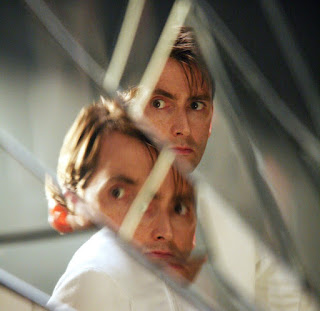
Derek Jacobi played Richard II in 1970. Probably a little old for the part, but very distinguished, nonetheless. He was also on an episode of Dr. Who in 2007.
Mark Rylance portrayed him in 2003. Again, Richard was very young, but I'm getting the feeling Hollywood is missing that point... as they usually do with these kind of things.
Waaaaiiiit a second, that's a girl! Indeed it is! Fiona Shaw (AKA Aunt Petunia), played Richard in a 1997 version of the play. I don't know if it was any good, but it's certainly an interesting take on the whole thing.
At the risk of sounding lazy, I'm only going to add that Cassy did a great job and I have nothing to add!
Friday, August 9, 2013
Review Me Twice: King Richard II by William Shakespeare

Reading about history - history I'm not well-versed in, anyway - and reading Shakespearean English: two things I'm not usually terribly excited to do. That did not change over the course of reading this play, but I didn't hate it.
Whenever I read something by Shakespeare, I either read about the history behind it - like with this one - or I read a detailed plot summary. It sounds like cheating, but really, it's allowing me to pay closer attention to the language than to the details of the plot (because I already know them). Remember what I said about translating while reading when we discussed Le Petit Prince last month? Reading Shakespeare is a lot like translating, unless you get one of those versions that's "translated" for you (and therefore isn't in the right meter, doesn't rhyme, and is basically useless). So it's helpful to know the story outline in advance, so you can be sure of what's happening. (Honestly, Cassy messaged me at one point to tell me she knew this guy had just died, but the manner in which he died was uncertain. Those are the kinds of problems you run into with Shakespeare sometimes.)
A play that starts with two guys having a financial dispute before the king doesn't seem like it's going to get much better... but then they challenge each other to a duel, and off we go! Of course, it takes an age and a half to get into the tournament, but then things get a little more interesting, and... well, I told you the ending yesterday, since it's based in history.
So all in all, I liked it, but it's not a brisk and simple read by any means. But who expects Shakespeare to be that?
I was discussing this book with Alex the other day and talking about how I had to catch up on the books for the blog. My exact words to her were, "Hopefully, I'll breeze right through Richard II."
I should know that one never breezes through Shakespeare, but it didn't take me LONG. The thing with Shakespeare is, that even after four years of high school, four MORE years of college (where I majored in English) and another five years of reading for my own personal enjoyment, Shakespeare never got easier to swallow over the years.
Did I dislike the play? Well, no, because we all know my obsession over English history (and this beings the Tudor reign.) It was enjoyable, but a lot of times, I miss what's going on. I often read summaries or at least the history behind it so I know I didn't miss any important plot points.
And, you know, Shakespeare is one of the most famous writers ever for a reason.
I mean, COME ON!! Who can write like that anymore? It's this awesomely beautiful rhyming couplet about how a guy is super depressed that he's being banished from his country.
Over all, I enjoyed the play, but it is Shakespeare, so it's not exactly light reading.
I was discussing this book with Alex the other day and talking about how I had to catch up on the books for the blog. My exact words to her were, "Hopefully, I'll breeze right through Richard II."
I should know that one never breezes through Shakespeare, but it didn't take me LONG. The thing with Shakespeare is, that even after four years of high school, four MORE years of college (where I majored in English) and another five years of reading for my own personal enjoyment, Shakespeare never got easier to swallow over the years.
Did I dislike the play? Well, no, because we all know my obsession over English history (and this beings the Tudor reign.) It was enjoyable, but a lot of times, I miss what's going on. I often read summaries or at least the history behind it so I know I didn't miss any important plot points.
And, you know, Shakespeare is one of the most famous writers ever for a reason.
"Then thus I turn me from my country's light
To dwell in solemn shakes of endless night."
I mean, COME ON!! Who can write like that anymore? It's this awesomely beautiful rhyming couplet about how a guy is super depressed that he's being banished from his country.
Over all, I enjoyed the play, but it is Shakespeare, so it's not exactly light reading.
Thursday, August 8, 2013
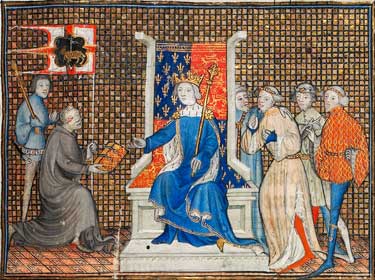
Who Was King Richard II?
King Richard II of England is, obviously, the king central to the plot of Shakespeare's King Richard II, much like how King Henry V showed up in King Henry V and there were a couple of characters named Romeo and Juliet in Romeo and Juliet. Funny how that works out.
But who was King Richard II? Unlike Romeo and Juliet, he was a real guy, and I'm going to tell you about him.
So, Richard's grandfather (Edward III) passed the throne directly to Richard, because of the deaths of Edward the Black Prince (Richard's father) and Richard's older brother (Edward of Angouleme, at the age of four). Richard's coronation was July 16, 1377, when he was ten years old.
This is where Shakespeare jumps in to tell the story in his play (so, you know... spoiler alerts, to the extent that there can even be spoilers for literature which has been around for centuries and is referenced just... everywhere) which covers the last two years of Richard's reign (1399-1400), which historians refer to as Richard's tyranny.
Anyway, Henry of Bolingbroke became Henry IV, which you may realize is the title of two of Shakespeare's plays (Parts 1 and 2). That's because King Richard II was the first of a tetralogy (like a trilogy... but with four parts), which ends with Henry V, who is - as you may have guessed - Henry IV's successor.
But who was King Richard II? Unlike Romeo and Juliet, he was a real guy, and I'm going to tell you about him.
Richard was born in 1367. He was the son of Edward, the Black Prince. Edward was the first Prince of Wales to never become king, as he died only a year before his father.
| You may also remember him as this guy, from A Knight's Tale |
His first major challenge as king came in 1381, in the form of the Peasants' Revolt (also known as Wat Tyler's Rebellion). It was mainly caused by the many problems that arose from the Black Death in the 1340s, high taxes caused by the Hundred Years' War, and issues with the local leadership in London. Richard successfully met with rebels and defused the tensions, coming out on top. (For fun, go ask the nearest 14-year-old when they last saved a country from a peasant uprising.)
In 1386, the threat of a French invasion grew, and - to be succinct - Parliament dealt with the situation. Richard was upset by their actions, because it stepped on the toes of his royal prerogative (which he put a lot of store in). This is just a humble book review blog, so I won't outline the finer points, but just pretend it was like a bunch of high school girls and their drama over who gets to decide whose house the sleepover will be at... except with more bloodshed and political discourse.
![]() |
| "He's so pathetic. Let me tell you something about King Richard II. We were best friends in middle school. I know, right? It's so embarrassing. I don't even... Whatever. So then in eighth grade, I started letting John of Gaunt rule, who was totally gorgeous but then he moved to Indiana, and Richard was like, weirdly jealous of him. Like, if I would blow him off to hang out with the Lords Appellant, he'd be like, 'Why didn't you call me back?' And I'd be like, 'Why are you so obsessed with me?' So then, for my birthday party, which was an all-Parliament pool party, I was like, 'Richard, I can't invite you, because you're the king.' I mean I couldn't have a king at my party. There were gonna be members of Parliament there. I mean, right? He was a king. So then his mom called my mom and started yelling at her, it was so retarded. And then he dropped out of the throne because no one would talk to him, and he came back a few years later to reclaim the throne, and he was totally weird, and now I guess he's on crack." |
The Lords Appellant (great band name?) took over control of the government, but - long story short - Richard took it back by 1389. For eight years, he did a good job, took care of business, and led peacefully. But in 1397, his apparently bottled rage at the Lords Appellant exploded, and he took revenge on them, executing or exiling most of them.
![]() |
| "Frenemies forever!" |
When John of Gaunt (Richard's highly influential uncle and adviser since before his reign began) died, Richard disinherited the previously exiled Henry of Bolingbroke, John of Gaunt's son. Henry invaded England in June 1399 with forces that quickly grew in number, with the intention to claim the throne for himself. Anticlimactically, Henry won and deposed Richard, who died in captivity the next year (murder being the likely cause).
Richard gets a bit of a bad rap, because he had two really bad years where he wanted basically everyone dead, and those are the two years Shakespeare immortalized in literature. But hey, Richard was a big fan of the arts and cultivating the cultural image of royalty, so he probably wouldn't have been too upset, I guess. His reign was, in fact, the period of time where English became a literary language, making Shakespeare's popularity possible in the first place. (Richard's time was the same as Geoffery Chaucer's time, if that's any indication.)
![]() |
| He also appeared in A Knight's Tale. Someone please just tell me I'm not the only one who LOVES THIS MOVIE. |
Wednesday, August 7, 2013
Favorite Shakespeare Play
Because we're reading one of William Shakespeare's plays this week, and because he wrote so darn many of them, we're picking our favorite Shakespeare play!

It will come as absolutely no surprise to anyone who knows me that I loved the Royal Shakespeare Company's version of Hamlet, given that David Tennant and Patrick Stewart are my two favorite actors, and they play Hamlet and Claudius / The Ghost, respectively.
I didn't really like Hamlet much until I saw this version. The characters are all just... terrible people. (Okay, I'll give Ophelia a pass, because I don't think her terribleness is really her fault. It's mostly Hamlet's fault.) Also, I had to read Rosencrantz & Guildenstern Are Dead in a theater class I disliked, and I didn't know Hamlet that well, so the two of them frustrate the hell out of me, even now that I know what's going on.
Side note: If you've never liked/understand the whole "alas, poor Yorick / I knew him" scene, you should watch Tennant do it. It's just great. And you can see from this still, although they kept the words verbatim the same from the original, the set and costuming are a contemporary update, and it works just... so well.
I had to read about a million and one Shakespeare plays in high school. And then I became an English Major in college and read about 101 more. So I've read a LOT of Shakespeare (Surprisingly, I have not read this week's pick, Richard II)
Over the years, I've always been more of a fan of his comedies, and in that realm, The Taming of the Shrew has always been one of my favorites.
I know that it's really terrible in terms of Women's Rights and all that (She was a fierce, independent woman and let herself be cowed by a man who married her for the money.) But, I just really like Kate. You don't get a lot of women, period, in Shakespeare, but to have a female that has such a HUGE effect on the story line and play? Well, that's part of the reason I just really liked the play.
Plus, Kate completely SCHOOLS the women at the end of the play, which I thought was kind of cool. The male kind of takes a backseat to Kate, which is a big deal when we're talking late 1500s Shakespeare.
10 Things I Hate About You is a modern adaptation to this play, and I pretty much LOVE that movie. I mean, Heath Ledger singing? What is not to love (plus, a really young Joseph Gordon Levitt.)
Over the years, I've always been more of a fan of his comedies, and in that realm, The Taming of the Shrew has always been one of my favorites.
I know that it's really terrible in terms of Women's Rights and all that (She was a fierce, independent woman and let herself be cowed by a man who married her for the money.) But, I just really like Kate. You don't get a lot of women, period, in Shakespeare, but to have a female that has such a HUGE effect on the story line and play? Well, that's part of the reason I just really liked the play.
Plus, Kate completely SCHOOLS the women at the end of the play, which I thought was kind of cool. The male kind of takes a backseat to Kate, which is a big deal when we're talking late 1500s Shakespeare.
10 Things I Hate About You is a modern adaptation to this play, and I pretty much LOVE that movie. I mean, Heath Ledger singing? What is not to love (plus, a really young Joseph Gordon Levitt.)
Tuesday, August 6, 2013
Iambic Pentameter (And Why It's Such A Big Deal)
Alex talked about Iambic Pentameter during NaPoWriMo, but I'm going to make it a little more relevant to your life. It is no secret that Shakespeare writes in Iambic Pentameter. It's drilled into our brains from the moment we step into a high school (and sometimes middle school). This is how he writes, it's hard to understand and clearly no one talks like that anymore.
Well, that's only a partially true statement. It is hard to understand, but more so because of all the thee's and Thou's going on. Also, the style of speech during that time is incredibly different. It's very flowery and over the top, mainly because people liked to be polite, but still insult each other. So they would insult each other with wit. The idea is that you wouldn't be smart enough to understand the reference (which, was just another jab to you, because then you were stupid.) Or, if you could understand it, then it was all played off as a bit of good humor, but you knew what was going down.
Some Shakespearean insults?
I do desire that we be better strangers. Puny, puke, hasty-witted lout. Because, you know, in Shakespeare's time being a quick thinker was a most terrible insult. (If you really want to get into it, go here for create your own Shakespearean insults.)
So, Iambic Pentameter. What is it, exactly? Well, Dictionary.com tells me it's "a common meter in poetry consisting of an unryhmed line with five feet or accents, each foot containing an unaccented syllable and an accented syllable."
Ok, so that was a bunch of mumbo jumbo. Basically, you get about 11 syllables, and five of them are stressed. Not just normal stressed, but every other syllable is stressed. Your voice goes up and down with each syllable, kind of like the crest and fall of a wave. Think of it like bobbing on the ocean. Something completely outdated that no one ever uses anymore, right?
WRONG
Our generation (basically from age 10 - 30 or so) are masters of Iamb and we don't even know it! We naturally alternate stressing our words. Like, if I were to say my name is Cassy, it would roughly sound like "my NAME is CAssy." Unstressed, stressed, unstressed, stressed, unstressed. (It is also half a pentameter, but that's just coincidence, I feel.)
And while, I will concede that we don't talk in pentameter and rhyming couplets like Shakespeare, Iambs have become ingrained into our everyday speech, in a way that it wasn't in Shakespeare's time. He's considered a master of Iambic Pentameter, because their speech patterns were different then, so it was a bigger deal. Ok, so putting everything in five stressed syllables and RHYMING them, still kind of baller.
So, if you are ever forced to read Shakespeare ever again, just try and think of it in terms of your every day speech.
Subscribe to:
Posts (Atom)