Monday, September 9, 2013

Author / Illustrator Bio: Neil Gaiman and P. Craig Russell

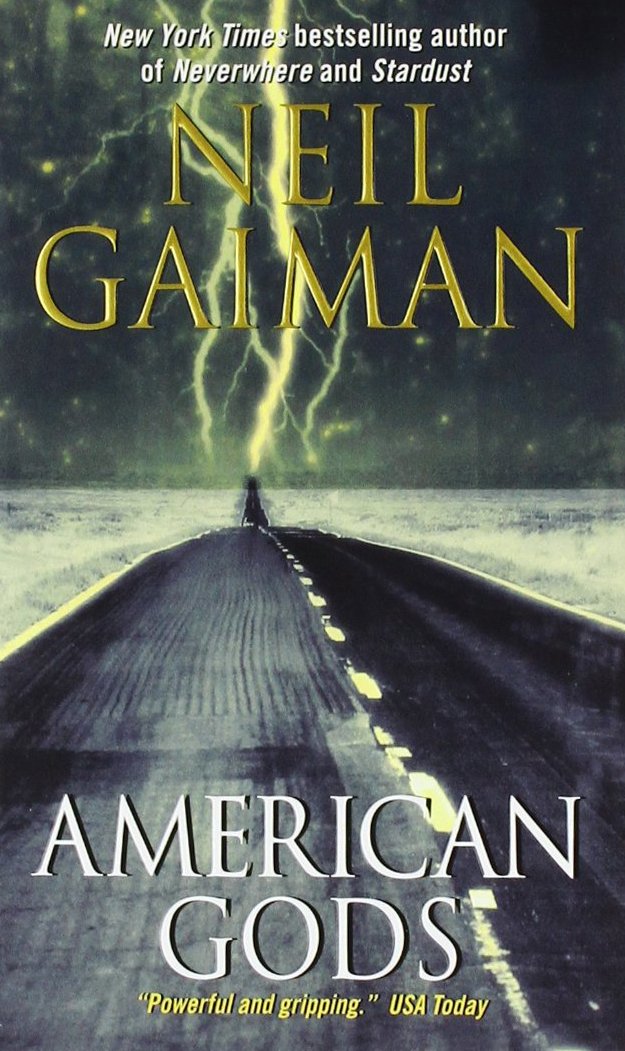
The time has come, friends. We're reviewing something by Neil Gaiman, and you know I'm loving it. But there's a twist... we're reviewing it twice... twice. See, P. Craig Russell turned Gaiman's Coraline into a graphic novel, so we're reviewing both. But first things first; today is author bio day.


Neil Gaiman was born in Portchester, Hampshire, which is in England. He keeps a great blog at his website, and is an excellent Tweeter. He always wears all black, not because he's dark and brooding, but because it makes it easier to put together a matching outfit. His family is Jewish and Scientologist, but he is neither. He began reading avidly at the early age of four, and seemingly knew his whole life that he wanted to be a writer.

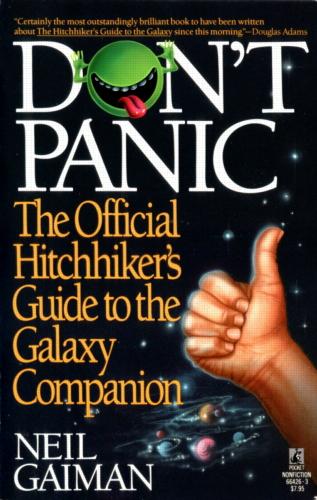
His first book was a biography of the band Duran Duran, published in 1984. He worked in journalism for a few years before writing Don't Panic: The Official Hitchhiker's Guide to the Galaxy Companion (1988).

Gaiman became friends with Alan Moore (who you heard about a couple weeks ago) and moved into the world of comic books. This is where he picked up and revived an old DC character, The Sandman, with his own spin.


I've discussed the Sandman series a number of times on this blog. It ran as a comic from January 1989 to March 1996 in 75 issues. It was one of the flagship titles of DC's Vertigo, and was republished in ten trade paperbacks, and - more recently - in leatherbound "ultimate" volumes including "behind-the-scenes" sketches and discussions of each issue in great detail.


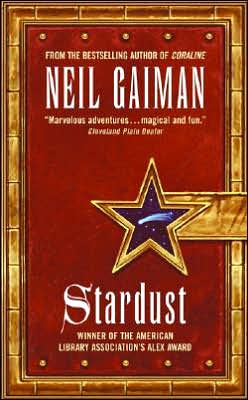
In 1990, Gaiman collaborated with Terry Pratchett (of Discworld series fame) on Good Omens, a comical take on the apocalypse. His first solo novel was Neverwhere, which was a novelisation of a teleplay for a BBC mini-series, published in 1996. Next came the fantasy novel Stardust in 1999, and American Gods in 2001 (and the revisitation to those characters in Anansi Boys in 2005).
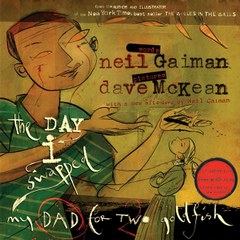

But those are just his works geared toward adults. He has also written over a dozen children's books (though he doesn't think of it as writing "for children"). The first was The Day I Swapped My Dad for Two Goldfish in 1997, followed by Coraline in 2002 and many others leading up to this year's Fortunately, The Milk.

I could - obviously - go on about Gaiman for days if Cassy let me, so I'm going to stop there and move on to talking about P. Craig Russell.


Russell is from Ohio and has won the Harvey (for achievement in comic books, named after Harvey Kurtzman) and the Eisner (for creative achievement in American comic books, named after Will Eisner) Awards multiple times each. He is, notably, the first openly gay mainstream comic book creator.

Amazing Adventures 30 (1970).jpg

Like most comic book artists, Russell has done a little bit of everything, and therefore the list of his work would go on forever. One relevant highlight for this week would be the work he did on the Sandman series, illustrating the story "Ramadan" in Fables and Reflections. (He also illustrated one of my favorite stories from Endless Nights, "Death and Venice.") He also has a series called The Ring of the Nibelung (you music buffs are right, that's based on Wagner) which he considers his magnum opus.

You can check out his website here, where you'll find tons of examples of his beautiful work.

Saturday, September 7, 2013

By Its Cover: The Girl with the Dragon Tattoo


Did you know there was a dragon in the background of this cover? I seriously didn't, despite having seen it dozens of times over several years, until I just copy/pasted it right here in this post. That book has been sitting next to my couch for over a month and I didn't realize that. So... it's not terribly effective, I guess.

It is, however, very recognizable, and I could point it out from across the room.

Design-wise, it's well done: bright cover catches the eye, simple text makes it easy to identify, and (incredibly) subtle cover art makes it unique without being overly busy. And it lent itself well to a series:


Each cover is clearly unique while simultaneously obviously part of the same group and equally recognizable.

Cassy, super late in the game today.  But now it's like a SURPRISE entry on your Saturday.

I, like Alex, didn't realize that there was a dragon in the background until she pointed it out RIGHT THEN.  I'm still not convinced that they're all like that.  I think it's a fluke.

However, it is a very recognizable cover and because of the nature of the color of its cover, easy to pick out on the shelf.  I mean, if I see a bright yellow spine on the shelf, I'm going to automatically assume that it's The Girl With the Dragon Tattoo (and I would probably be right.)

I like that all the covers fit together too.  I think cover two and three fit more with the book titles (book two LOOKS fiery, and book three gives you a feeling of a hornets nest.)  Like Alex pointed out, the design on the cover of book one is just a little too subtle for my taste.

Friday, September 6, 2013

Review Me Twice - The Girl With the Dragon Tattoo by Stieg Larsson


This is the second time that I've read this book, and as I started to reread it, I realized WHY I liked it.  It's interesting and engaging, and Larsson can draw you in pretty awesomely, if you ask me.  He knows how to give you just the right amount of information.  That's kind of what makes an amazing mystery novel: knowing how to pace it.

I also LOVE Lisbeth Salander.  She's very independent, but still manages to make connections with people in her own way.  I really like when she becomes FRIENDS with people, because it's so hard to break into her little inner sanctum and so few people do it.

However, Larsson's book has a lot of drawbacks.  For one, if you are an American reader (which... on this blog, most of us are), it's a hard book to get into.  I remember the first time I read it, I was so off-put by the opening scene that I almost put the book down.  There's a lot of jargon that we, as Americans, don't really grasp the concept of (we're not really a libel kind of country).  There are also so many NAMES to keep track of in the beginning of the book and they're all very, well, Swedish.

Not to mention, this book is very adult.  There's a multitude of sexual relationships, not to mention rape and... some pretty awful and vicious stuff that happens.  That didn't deter me in particular, but there are a lot of people who wouldn't care for the graphic content.

I still love the book, though, and I'm still glad that I reread it.

My bottom line 4 out of 5.

I'll tell you right off the bat, I didn't finish the book. I feel like I didn't make much of a dent at all, but to be fair, I had to get the large print copy from the library because, even after several years of popularity, it's still flying off the shelves. I know; how do you  not finish a compelling mystery? But it happened. Sorry.

I can attest to the fact that I love the beginning. I've always paid close attention to how an author hooks the audience, because I've always had a hard time myself deciding where and when and with whom my stories should start. This one is great. You expect, from the title and whatever else you know about the book, to jump right in with the titular Girl, but instead you're reading about this guy who gets flowers on his birthday every year. What even? It's great. And that's just the prologue... the first chapter is yet another non-titular-girl scene, talking about some journalist and a court case and whatnot. (Clearly, Cassy and I disagree on this point, because I was totally hooked.)

We do agree on the Swedish names. It's difficult to keep track of lots of characters when their names are entirely unlike those from your culture, unless you're ridiculously familiar with that particular culture. It's why I have a really hard time with Asian literature; I don't know the names well enough to easily discern them. (And I don't pay close attention to names in books in the first place; I can get lost dealing with John and Mike and Sam.)

Thursday, September 5, 2013

Literary Tattoos

You may have guessed that a tattoo comes into play in this week's review book, based on the title The Girl With the Dragon Tattoo. So I'm going to talk about other literary characters with tattoos!


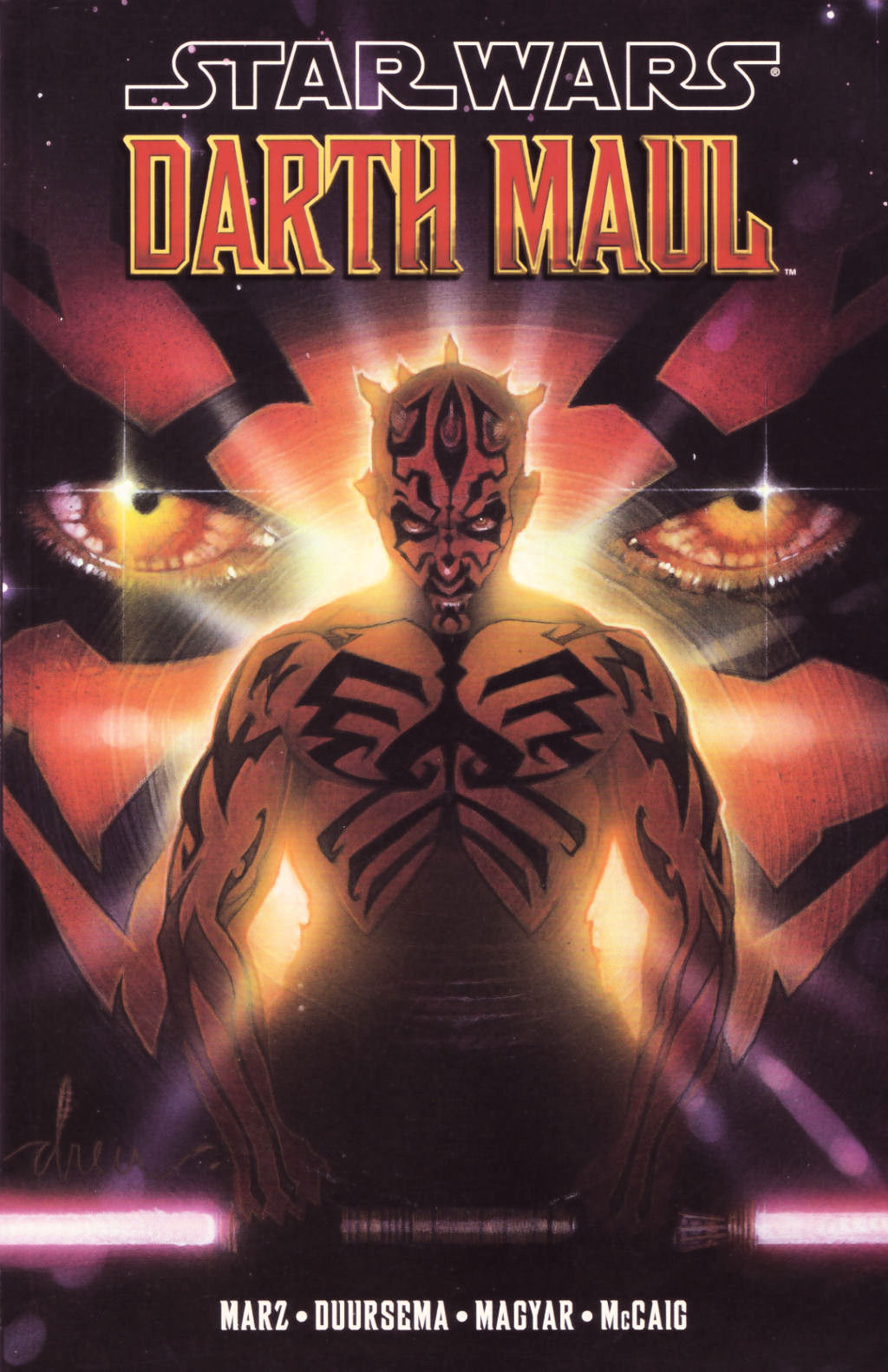
I'm starting with comic book characters, because it's more obvious when they have tattoos because you can see them. In Darth Maul's case, you see them every time you look at him, because they're pretty much everywhere. Some sources call his tattoos the markings of a warrior, and some call them the mark of a Sith lord (which makes less sense, because how many other Sith lords do you see with these? Exactly).


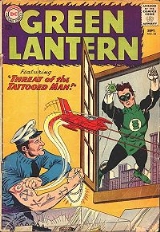
There are actually three versions of The Tattooed Man in Green Lantern. The first (above) appeared in 1963, a sailor-turned-burglar, who conjured real things from his tattoos (as seen above). The second was a cellmate of the first, and his tattoos had arcane powers that could trap people inside. The third's tattoos were the sins of men he had killed; he was murdering people to "sin-graft" their sins onto himself, thereby - in his mind - absolving them.


In case you didn't know, Magneto from X-Men grew up in the Auschwitz concentration camp, so he has a prisoner number tattoo. Definitely a different take on tattoos on characters, and a very powerful one.


Tattoos actually show up in Pretties first, as one of many types of vanity "surge" (surgery) available to Pretties. Shay gets jeweled timepieces installed in her eyes which run backwards, because otherwise what's the point? In Specials, Shay and Tally become Specials (spoilers?) and get harsh, intense tattoos like the one pictured above to set them apart from regular Pretties, who would never be allowed to have something so not-happy-making.


I, for one, would really like to see the next edition of the Divergent series books with images of tattoos of the factions, like what the Dauntless initiates get.


Remember when we reviewed Sideways Stories from Wayside School and I talked about my favorite children's books? I briefly mentioned a potato tattoo in my summary. That's because Calvin, one of the kids in Mrs. Jewels' class, is told he can get a tattoo for his birthday. (Ignore the fact that they're in elementary school; much weirder things happen in this series.) Everyone suggests things like a snake fighting an eagle, or a tiger, or a sword... he comes back the next day and proudly shows off his tattoo: a potato. Everyone thinks it's stupid, but his explanation is "I like potatoes." It's a nice, non-didactic lesson in being yourself despite what other people think.


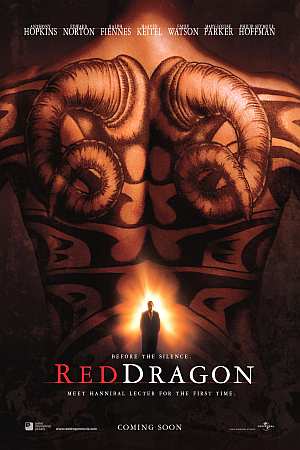
The villain of Red Dragon (who is - shockingly! - referred to as Red Dragon, or Francis Dolarhyde) has the tattoo shown on the cover. You may remember it from the movie.


The Illustrated Man by Ray Bradbury is a collection of unrelated short stories tied together by the framing device of the Illustrated Man, a stranger met by our unnamed narrator. His tattoos are animated and tell the various stories in the book. Bradbury used the Illustrated Man again in Something Wicked This Way Comes as an antagonist, where his tattoos are the souls of victims from a carnival. If you've never read "Kaleidoscope" you should (if you're amenable to sad-ish endings). And if you like "Doctor Who," you'll probably like "The Long Rain," set on Venus and ending on lots of madness. I'm also quite fond of "The Fire Balloons," and "The Visitor" and "The City" are a lot like two of the short stories from The Martian Chronicles.

What other tattooed book characters do you know of?

Wednesday, September 4, 2013

Favorite Literary Female Bad-Ass

The protagonist of this week's review book, Lisbeth Salander The Girl With the Dragon Tattoo, is a female bad-ass, so we're choosing our favorite female bad-asses from books!


Hermione Granger is just the coolest chick ever. She's unabashedly smart (although yes, the 12-year-old version of her is insufferable, but the 12-year-old version of most people is insufferable), she's pretty but doesn't really seem to care about it, she's fierce... she's AWESOME. It's like Ron drinks nothing but Felix Felicis because he is one lucky guy.

The movies just solidify her awesomeness, because you get to see the look on her face when she just throws out an angry curse in the Department of Mysteries or casually tosses a dangerous hex over her shoulder in the Battle of Hogwarts. It's the wizarding equivalent of walking away from an explosion without looking at it.

I know I mentioned this series relatively recently but... well, when it comes to bad ass females, you just don't get more bad-ass than Anita Blake.


In Obsidian Butterfly, Edward (the cool one, not the sparkly one, but wouldn't THAT be an awesome cross over.  Anita Blake kills Edward Cullen with the helfpof Edward) has Anita tally up the amount of people/creatures that she's killed.  And it comes to this obscene number (seriously... it's like 50 something, I think.)  And then, instead of being all, "Yeah, I killed fifty fucking people", she gets pissed at Edward (who, is really scary and could snap her in two if they weren't friends) for making her basically have a pissing contest with the guy at the front door.

She is almost always in a bad situation, and she always uses her wits (and often her gun) to get out of it.  She is a shoot first, raise you from the dead to ask you questions later kind of girl.

And the best part?  She's super bad-ass without being UBER manly.  She still has some ridiculously girly qualities.  And I like that.

Tuesday, September 3, 2013

Literary Tattoos

Later this week, Alex is also going to talk about literary tattoos (and, for the record, she TOTALLY gave me this idea and I'm copying her.  It's fine.)  When she talks about it on Thursday, it will be literary characters that have tattoos.  Mine?  Well, I'm just going to show you fun book tattoos.

First and foremost, you have to read THIS LIST on Buzzfeed about 50 awesome tattoos.  (That was your warning about Buzzfeed.  What you do with the next four hours of your life is not my fault.)  Some of the tattoos are even of books we've reviewed on here!  But I think my favorite is the one from "Alexander and the Terrible, Horrible, No Good, Very Bad Day."

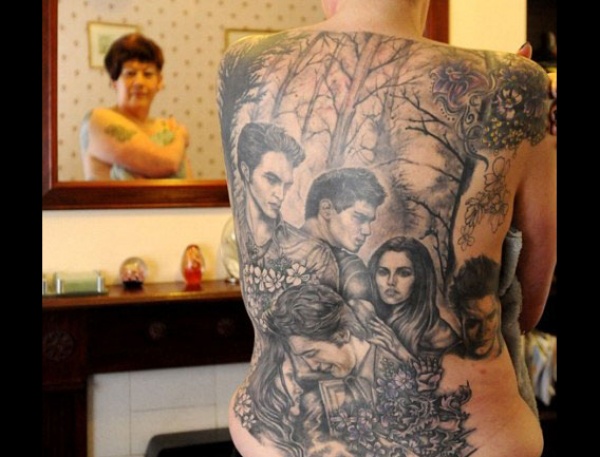
I also want to point out that some people are a little too devoted to their fandom.


That's some life choice right there.

However, there are a lot of tattoos out there that are GREAT representations of their literary counterparts.  Some of them are tiny and discreet.


Just a little diddy to show your love.

Some of them are a little more elaborate, but look awesome.


Some of them, like the below two, remind you of your childhood, which makes them infinitely more awesome.


Alex would have me remind you that comic books are books to.  Therefore, it stands to reason that comic book tattoos would fall into the category of literary tattoos.


I know this tattoo is simple, but a lot of people get just words from their favorite books.  This is a tattoo of one of my most favorite literary lines.


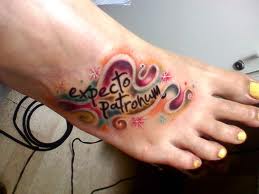
This last tattoo has a fairly recent tattoo style going on that makes it look like an airbrush or a paint swipe, which is actually really cool.  Combine it with a book reference, and you can't really go wrong.


Have a literary tattoo?  We would love to see it!!  In fact, we would love to see ANY tattoo you have. And maybe, if you show us yours, we'll show you ours.

Edit: HEY LOOK!! One of our readers sent us a picture of her literary tattoo!


This is Tamara's tattoo!  It's from Jonathan Livingston Seagull by Richard Bach.  Too cool!

Monday, September 2, 2013

Author Bio: Steig Larsson

Stieg Larsson.jpg

Steig Larsson (full name Karl Stig-Erland Larsson) was a journalist and writer in Stockholm, Sweden. He is best known for his "Millenium" series, which you might think of as "The Girl" books: The Girl With the Dragon Tattoo (this week's review book), The Girl Who Played With Fire, and The Girl Who Kicked the Hornet's Nest.

He published several non-fiction books during his life, but the Millenium books were published posthumously, after his death at age 50 in 2004 (of a heart attack, walking up stairs.  That'll teach you to try and be healthy...) In 2008, Larsson was the second-best-selling author in the world (following only Khaled Hosseini, author of The Kite Runner (2003) and A Thousand Splendid Suns (2007)).

After receiving a typewriter as a gift for his twelfth birthday, Larsson's early attempts at fiction were sci-fi. He enjoyed writing, and changed the spelling of his name to "Steig" to avoid confusion with his friend Stig Larsson (who became a famous author first, but didn't get the international renown of Steig).

Larsson was also a left-wing activist, and in fact left his assets to the Socialist Party in his will. Unfortunately, his will was not legal under Swedish law, so instead, his girlfriend (who had no legal right to his assets) and his family argued over his estate for years.

His girlfriend was actually his partner for years, but did not want to marry due to security issues.  They would to put their address on public record, therefore endangering Larsson (who had many extremist groups he reported on after him.)